

Most economists see structural transformation as one of the main routes to Africa’s sustainable development. What it means is changing the share of agriculture, manufacturing and services in an economy. It is a central aim of the African Union’s Agenda 2063.
With this aim in mind, economists and policymakers need to know what determines structural transformation. They have flagged factors like demand for goods and services, trade policies, financial development, institutional quality and economic integration.
But researchers haven’t closely examined the way economic integration through trade and finance influences structural transformation.
I therefore set out to study African countries’ integration with the rest of the world and the effect of that integration on their structural transformation. This study provides fresh evidence about whether integration is good for Africa. It also unearths the right levels of integration necessary to increase structural transformation.
Trade and financial integration are both about countries exporting to and importing from each other. The two are often referred to as economic integration. Opening national borders to trade has a number of potential benefits which can promote development. For example it creates comparative advantage, access to external finance and opportunities for risk sharing. It also enables technology transfer. Local firms serving larger foreign and domestic corporations can acquire knowledge and skills and transfer them to the rest of the economy.
All these benefits are essential for structural transformation. But excessive openness and integration may also come at a cost, largely from distortions around trade policy. For instance, if certain local industries have been protected, local firms may not be fit enough to compete with foreign counterparts. Opening these industries to competition may harm them.
Balancing the potential benefits and dangers of integration is a pressing policy issue now that African countries have signed the African Continental Free Trade Area agreement, which aims to foster integration.
Policy makers need to know whether there is an ideal level of trade and financial integration that will change economies in the desired ways.
The study: findings and implications
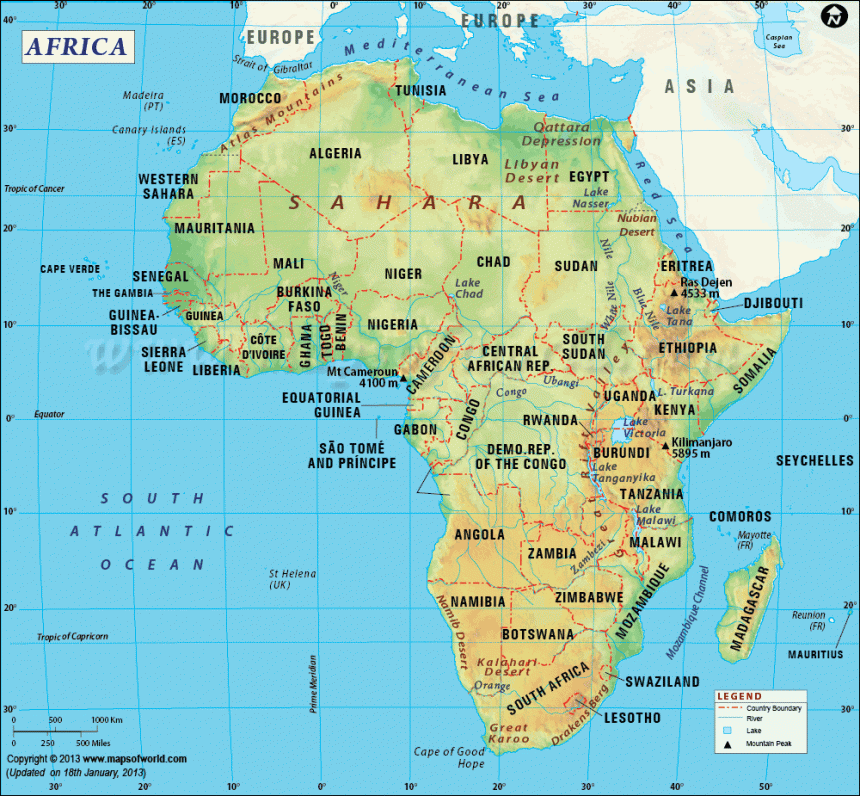
With this background, I examined the effects of economic integration on structural transformation in 32 African countries from 1985 to 2015. The time period and choice of countries were based on data availability.
I created an index of structural transformation that incorporates changes in sectoral value addition and demographic characteristics. The index ranges between 0 (low transformation) and 1 (high transformation). I found that structural transformation on the continent was low, with an average value of 0.419, but varied across countries.
The majority of the countries’ indices were lower, suggesting that structural transformation is only just beginning.
I also found that African countries were less integrated in terms of trade and finance than other developing economies.
I measured trade integration as the ratio of countries’ imports and exports to GDP. This shows the degree of openness. I found that the optimal level for trade integration was 73.29% of GDP. By this I mean the level of trade integration that produces an improved effect on structural transformation.
The data suggested that trade integration encourages the reallocation of resources to more productive sectors.
To measure financial integration, I used the ratio of countries’ total foreign liabilities and assets to GDP. This shows the degree of restriction of capital flows. The optimal level for financial integration was 137.5% of GDP. Ten African countries were above these levels and 22 were below.
The 10 countries that are above this financial integration threshold are Botswana, Congo Republic, Côte d’Ivoire, The Gambia, Guinea Bissau, Mauritania, Mauritius, Seychelles, Sudan and Togo. Similarly, the 10 countries above the trade integration threshold are Botswana, Congo Republic, Côte d’Ivoire, Gabon, Mauritania, Mauritius, Seychelles, Eswatini (formerly Swaziland), Togo and Tunisia.
I observed that structural transformation increases more in countries that are below these levels of integration compared to countries that are above the thresholds. Integration increases structural transformation, but too much integration slows that process, producing undesired effects.
The positive effect of integration on transformation occurs through enhanced efficiency, comparative advantage, external finance and risk diversification. Countries can have these features despite being less integrated and operating below the thresholds. The benefits of integration come from efficiency of integration rather than unbridled integration.
A key implication is that efficiency in both trade and financial integration is critical to driving structural transformation in Africa. This explains the urgent need for African countries to simultaneously deepen trade and financial integration. Economies that embark on economic integration along both lines can expect to have improved transformation for sustainable development.
The role of the free trade area
The study shows that Africa has opportunities to integrate further. The African free trade area has the potential to defragment the continent and bring its economies into the global economy.
The free trade area aims to progressively eliminate tariffs and non-tariff barriers to trade in goods and to liberalise trade in services. It will establish a single continental market for goods and services: a bigger and more competitive market.
A bigger free trade area will not only boost intra-regional trade, it will also hasten the development of regional supply chains. These have driven structural transformation in other regions, for example Asia. It is also necessary for policy to address the non-tariff barriers to trade. Among these are poor logistics and infrastructure (such as roads, rail, ports, power and digital connectivity).
Countries should be focusing on removing such bottlenecks. The African Union, United Nations Economic Commission for Africa and the African Development Bank should get the free trade area working as soon as possible.
It has the potential to make a big difference to structural transformation and could be the game-changer for Africa.