
…Rules out deficit monetisation, unfunded commitments ahead of elections

…Says coastal highway could create 250,000 jobs, cut logistics costs by 15–20%
…Insists every naira borrowed must be justified by economic value
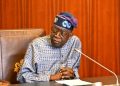
President Bola Ahmed Tinubu has defended his administration’s borrowing programme, saying new loans must increasingly finance infrastructure that generates jobs, raises productivity and supports Nigeria’s ambition of becoming a $1 trillion economy by 2030.
He also said the Federal Executive Council’s economic approach ruled out deficit monetisation and unfunded commitments during the pre-election period, stressing that investment must proceed alongside fiscal discipline.
In an article titled “From reforms to delivery: Our infrastructure investment and growth strategy,” the President said the next phase of his administration’s economic programme would be measured by completed projects and improvements in Nigerians’ lives.
“The key question is not how much we borrow, but what we build, the value we create and the future we leave behind.
“Although loans must be repaid, the roads, ports, railways and economic opportunities they finance can serve generations,” he said.
The President said the government was shifting from borrowing to meet short-term fiscal pressures to financing assets that expand the country’s productive capacity.
He identified priority investments as the Lagos–Calabar Coastal Highway, Sokoto–Badagry Superhighway, Trans-Sahara Superhighway, electricity grid improvements and upgrades to major commercial ports in Lagos.
He said these, alongside rail infrastructure, hospital rehabilitation, education and vocational training, would connect economic regions, reduce business costs and attract private investment.
“We cannot build a $1 trillion economy with infrastructure designed for an economy a fraction of that size.
“We are investing in infrastructure for the next 50 years, and our financing strategy must reflect that ambition,” he said.
The President acknowledged the need for restraint, putting public debt at 35.75 per cent of gross domestic product in the second quarter of 2026 and debt service at about 65 per cent of revenue in the first half of the year.
He said those figures reinforced the importance of ensuring that borrowing produced measurable economic returns while reducing refinancing pressures.
According to him, the government is seeking longer repayment periods and lower financing costs to align infrastructure loans with the useful lives of the assets they fund.
“Infrastructure built to last forty years should be financed over a horizon consistent with its life,” he said.
He said the economic cost of delayed investment must also be considered, saying stalled infrastructure meant lost employment, higher logistics expenses and missed business opportunities.
On the expected benefits of the Lagos–Calabar Coastal Highway, the President said the project could reduce logistics costs along the corridor by 15 to 20 per cent and add up to two per cent to Nigeria’s GDP through industrial development, trade and tourism.
He projected about 100,000 direct construction and engineering jobs, alongside more than 150,000 indirect jobs in logistics, materials supply and services.
The President said similar benefits were expected from the Sokoto–Badagry and Trans-Sahara corridors, with construction employment followed by longer-term opportunities in businesses, farms and industries along the routes.
He said as of August 2026, Lot 2 of the coastal highway was more than 80 per cent complete, while works on the Calabar–Akwa Ibom section had exceeded 30 per cent.
“We are building more than highways. We are opening economic corridors, connecting markets, supporting industries and reshaping Nigeria’s economic geography.
“The value of a road extends beyond the completed construction to the farms, factories, businesses and communities it connects,” he said.
The President said the infrastructure programme rested on gains from petrol subsidy removal, exchange-rate unification, tax reforms and measures to curb inflation.
According to him, real GDP grew by 4.43 per cent in the second quarter of 2026 and 4.2 per cent in the first half, while headline inflation declined to 14.63 per cent in September from 20.98 per cent a year earlier.
He said, however, that food inflation remained elevated at 19.59 per cent.
The President put gross external reserves at $55.1 billion as of October 9, including about $46 billion in net reserves, which he described as an 18-year high.
He said the tax-to-GDP ratio had increased from seven per cent to 12.5 per cent. In comparison, net Federation Account Allocation Committee distributions rose by 44 per cent, from N15.2 trillion in 2024 to N21.9 trillion in 2025.
He said stronger fiscal conditions were supporting increased investment across tiers of government, with capital expenditure’s share of state spending rising from 46 per cent in 2023 to 61 per cent in 2025.
He cited favourable actions by international credit rating agencies, Nigeria’s restoration to FTSE Russell’s Frontier Market category and its removal from the Financial Action Task Force grey list as signs of improving financial credibility.
The President also pointed to strong international demand for Nigerian Eurobonds, saying renewed investor confidence offered opportunities for longer-term financing at more competitive rates.
He said the Monetary Policy Rate had fallen from 26.5 per cent to 23 per cent in September. However, lending rates above 30 per cent continued to underline the need for cheaper financing for productive investment.
He outlined five priorities for the next phase: food affordability and energy price stability; budget harmonisation and fiscal discipline; completion of high-impact projects and critical infrastructure; improved economic policy and regulatory efficiency; and targeted household support and human development.
The President said that access to financing alone would not constitute success.
“Securing financing is only the beginning. The real achievement lies in completing projects, delivering value for money, and improving Nigerians’ lives.
“Every Naira borrowed must be justified by the economic value it creates, and we must measure every project by its results,” he said.