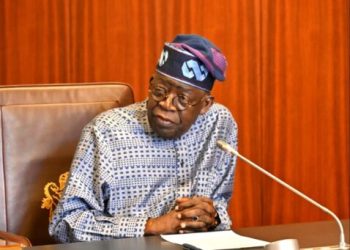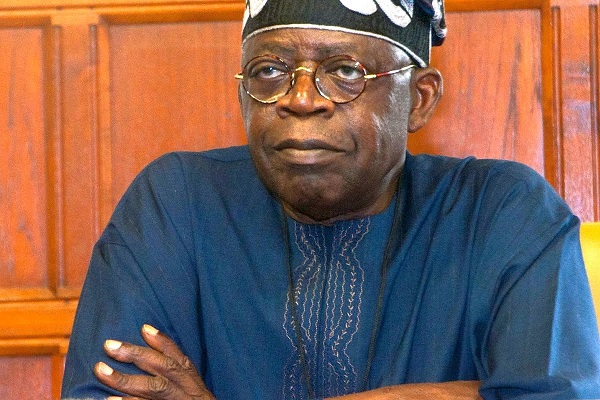
As the 16th president of Nigeria, Bola Ahmed Tinubu inherits an economy that is grappling with inflation, chronic unemployment, extreme poverty, crumbling infrastructure and insecurity.Nigeria’s debt profile stands out among these problems like a sore thumb. The country’s external debt stock – what it owes non-residents – was US$41.69 billion in 2022.Multilateral lenders accounted for almost half of this figure. Eurobonds accounted for about 38% of Nigeria’s external debt. Exim Bank of China accounted for US$4.3 billion, or 86% of the $5 billion in bilateral debt.The country’s public debt stock – what the government owes in total – was about US$100 billion in 2022.External debts present a bigger burden because they are denominated and serviced in foreign currencies. Changes in exchange rates, such as currency depreciation in a debtor country, can raise interest payments and negatively affect a country’s budget. And interest rates may rise.As an economist, I argue that, while the country’s debt profile should be a concern, it need not hamper Tinubu’s ability to revitalize the Nigerian economy, and to reduce unemployment and poverty rates.The most salient question is whether the current debt levels are sustainable.

Debt sustainability
Although economists use various indicators to determine a country’s debt sustainability, two of those measures are widely used. One of the indicators is gross debt as a percentage of gross domestic product (also known as the debt-GDP ratio). In Nigeria it was 38% in 2022. The average for sub Saharan African countries was 56%.A World Bank study shows that debt begins to hurt an economy, especially economic growth, when the debt-GDP ratio exceeds 77%. Given this threshold, the debt-carrying capacity of the Nigerian economy is still strong.Moderate and prudent additions to the country’s debt stock would not push it over the precipice of debt unsustainability, at least in the next few years. This does not mean that the country should go on a borrowing spree to finance frivolous and vanity projects. It simply means that the current debt level does not prevent economic growth, employment generation and poverty reduction.Although the US is different from Nigeria, it has demonstrated that debt need not constrain economic vitality. The US debt-GDP ratio is about 120%, but it has been able to reduce unemployment to 3.4%, while holding inflation at 4.9%.Another indicator of debt sustainability is the debt service ratio. This is the proportion of export earnings that is used to service a debt – that is, to pay back the principal and the interest. A healthy ratio is below 18%.Nigeria had a debt-service ratio of 16.2% in 2021, compared to 3.2% in 2015. The 2021 number shows that Nigeria is getting closer to the point where servicing its debt would become a problem.But the Nigerian situation is not as dire as many African countries’, with an average debt-service ratio of 19% in 2021.
Revenue and spending
To ease Nigeria’s growing debt burden, the Tinubu administration must address the country’s declining revenue. Nigeria has the fourth lowest revenue-GDP ratio in the world.Government revenue as a percentage of GDP has declined from 13.5% in 2010-2014 to just 6.9% in 2020. The averages for sub-Saharan Africa and the world in 2015-2020 were 20.1% and 24.2%, respectively.Nigeria’s reliance on oil as a major source of revenue implies that revenue will continue to fall, given uncertainties in the global oil market and rampant theft of oil in the country. The World Bank’s forecast of sluggish economic growth (below 3%) in the next three years would also worsen the country’s capacity to generate revenue.Meanwhile, government expenditure has been growing (except during the COVID era) faster than expected. The deficits will have to be covered by borrowings. More borrowing means that an increasing proportion of revenues generated will be devoted to debt service.Because of dwindling revenue, Nigeria’s debt-revenue ratio was 80.6% in 2022, which is far higher than the 22.5% recommended for developing countries by the World Bank.The ratio is expected to exceed 100% by the end of this year. High debt-revenue ratios create a perpetual cycle of debt. Since revenues are used to service debt, the country must borrow to finance government expenditures. As the debt grows bigger, more revenue is devoted to debt servicing, which in turn increases the debt-revenue ratio.While Nigeria’s debt-revenue ratio is very high, the ratio of external debt service to revenue is moderate at 20% and below that of many other African countries. This means that, for every 100 naira in revenue, 20 naira is used to service external debt, leaving 80 naira for government expenditure and domestic debt service.Although Nigeria’s debt-GDP ratio is sustainable and below the levels specified by the IMF, it is worrisome that the external debt-GDP ratio has been rising during the past decade. It was just 9.3% in 2010, five years after Nigeria reached a historic agreement with the Paris Club of creditor nations for debt relief worth $18 billion and a $30 billion reduction in the country’s debt stock.The debt-GDP ratio is now 38% and is expected to reach 43 percent in the next five years. . Given dwindling government revenues, slow economic growth and rising expenditure needs, there are concerns that the government will continue to rely on borrowings to finance economic development.
Digging out of debt
The Tinubu administration should be careful not to worsen the country’s debt profile.The incoming government should manage Nigeria’s debt very prudently, and avoid going back to the era of the early 2000s when the country’s debt-GDP ratio exceeded 50 percent.It should reduce the high cost of governance cost, eliminate wasteful spending and rein in corruption.Perennial borrowing to solve economic problems can plunge the borrower into unsustainable and destructive indebtedness.Given low revenue and the many projects needed to promote economic growth, employment generation and poverty reduction, the Tinubu administration will have to continue with the policy of deficit spending, financed mainly by domestic and external borrowing.The question will not be whether to borrow, but how much.Drastically reducing the cost of governance will be difficult if political patronage continues.A long-term solution to Nigeria’s debt problem is to explore new sources of revenue. To change the current narrative about how risky Nigeria is, the Tinubu administration should introduce policies that improve Nigeria’s economic fundamentals.
Conclusion
A country’s debt stock does not matter as much as the quality of its economic policies. Economic policies could result in budget surpluses that can be used to repay debt.A starting point is to invest in physical capital and infrastructure (especially roads and electricity); provide access to capital for micro, small and medium-sized enterprises; and support agricultural development.There is also an urgent need to diversify the economy, make it less reliant on oil and broaden the country’s very narrow revenue base.One strategy is to resuscitate the moribund factories in Nigeria and promote agro-processing industries, so that the economy would generate more revenue from non-oil sources to finance government spending and projects.