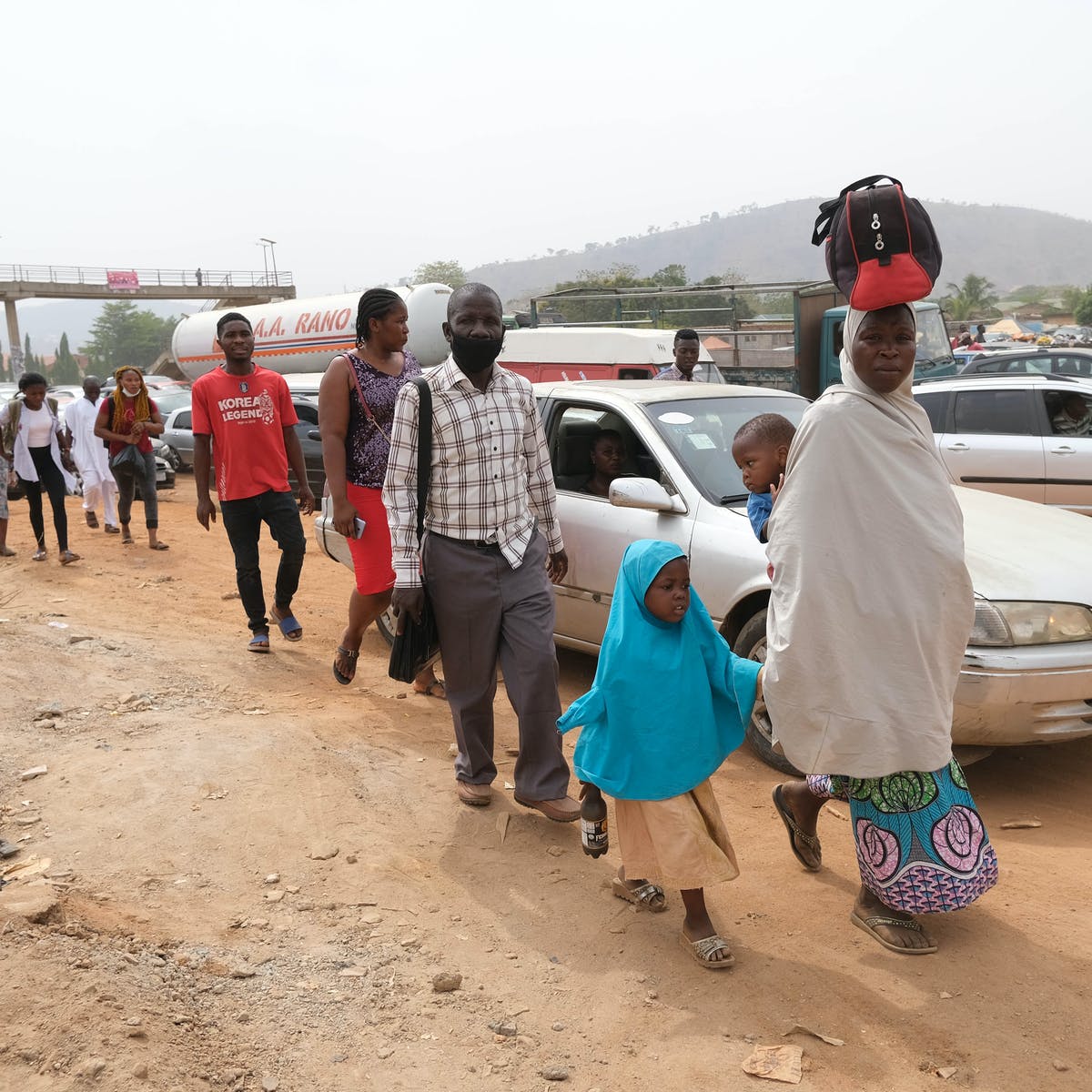
Walking remains the main modeof transport in many sub-Saharan African cities, especially among low-income residents in informal settlements. Yet, it is well acknowledged that walking conditions in African cities are precarious and unsafe. This is partly due to the prioritisation of local urban design for auto-mobility.

Under the right physical and social conditions of the urban built environment, walking offers major benefits. But in most cities across Africa, poor planning and pedestrian infrastructure makes walking a serious challenge.
Yet, it’s something that most people who live in African cities have to do every day. The majority of Africa’s urban population live in informal settlements. These are often neglected by state authorities, under-serviced and deprived. They have limited access to basic transport infrastructure and services. As such, many low-income informal residents’ resort to walking and other informal transport systems.
This has led to the notion that African cities are “walking cities” that are not walkable.
Recent research shows the socio-economic benefits of walking in African cities. Yet, there is still little understanding of the walking environment, residents’ everyday walking practices and their impact on walking experiences.
We therefore set out to analyse walking practices in informal settlements. Our pilot study was conducted in Moyiba, an informal settlement in Freetown, Sierra Leone.
Unwalkable cities
Walking should be the most equitable mode of transport. But for many African urban residents, walking is forced on them. It is also a manifestation of socio-spatial inequalities.
Research on African cities show that improvements in non-motorised transport infrastructure is crucial to accrue the physical, social, and psychological benefits of walking.
Accordingly, scholars and practitioners have suggested the need to integrate walking into urban transport and development planning in African cities.
Indeed, global agenda such as the Sustainable Development Goals, New Urban Agenda, and African Union’s Agenda 2063 all highlight the importance of walking in building equitable and sustainable African cities.
Sadly, on the continent better planning for and the integration of walking into urban development plans is undermined by socio-spatial features of the urban built environment.
Other contributing factors are political and social exclusion of low-income communities.
For example, in some cities such as Nairobi and Dar es Salaam, studies show a lack of well-defined and dedicated infrastructure for walking. These include walkways, attractive facades or open spaces, and street lights. In Cape Verde, the differences between neighbourhoods are stark. Poor neighbourhoods are more likely to be located along slopes with limited walking infrastructure.
The research
We used a participatory web-mapping tool, Maptionnaire, to explore the variety of walking routes and their characteristics. We used the tool also for a qualitative assessment of local walking practices and experiences to shed light on the realities of everyday walking.
The study showed that walking is the predominant mode of transport within the settlement. Daily commuting patterns combine walking with other informal transport modes such as okada (commercial motorcycle) and poda poda (commercial transit bus).
The study revealed that residents of Moyiba are not walking because it is a sustainable choice. Rather, walking is imposed by exclusionary urban configuration. This includes the steep physical terrain, unplanned physical morphology, limited connectivity and poor infrastructure for motorised transport.
Data from our maptionnaire tool revealed that only 11% of the mapped walking routes were paved. Paved roads were severely damaged or had become dumping grounds for construction materials or solid residue from waste. For residents, walking is the default position because of the poor availability of public transport. Then there is the high cost of transport fares. In addition, walking is faster than other alternatives.
Our study found that walking intersects with everyday social and economic lives. Some respondents walk because “everyone walks”, thus allowing for social interactions. Walking also provides easy access to community or economic facilities, including schools, churches, water stations, and street vendors. These are often located along walking routes.
Unfortunately, our study showed that walking routes were exposed to more than 120 risks. These included:
-steep routes that were a potential for mudslides,
-potholes,
-open electrical wires and
-abandoned construction material along walking routes.
Residents have mitigated these risks, either individually or through collective efforts. Collective efforts include the the provision of street lighting and the use of sandbags along walking routes during the rainy season. They have also carved stairs within the steep terrain using gravels and rocks were common.
The study showed the benefits of walking in a safe, comfortable and aesthetically pleasing environment. Residents rated highly walking routes with street lights provided by the community. Similarly, routes with natural or self-planted trees for shade, and street benches for relaxation educed feelings of comfort and attraction. On the other hand, walking routes marred with dirt and dust, isolation, and lack of nature produced negative feelings among residents.
Conclusion
Our findings point to the issues policy makers should take into account when planning urban transport and building roads.
They should also find ways of enhancing community-led initiatives aimed at making cities walkable. Communities are highly adaptable and innovative in their approaches to mitigating the risks of poor infrastructure. However, their efforts have limits. The long-term and sustainable solution is for urban transport and development planners to integrate the walking experiences and behaviour of local residents into their planning.
They can do this through experimentation and other strategies that build the capacity of communities to mitigate risks. In addition, existing community initiatives should be incorporated into future planning for a comfortable and pleasurable walking environment.
Officials should seek to understand walking from the perspective of residents. This will provide insights on the challenges and opportunities for access to everyday social and economic facilities. This will also inform the upgrading of informal settlements.
The overall public policy objective should be to promote an inclusive city where residents are not captive walkers but walk because it is accessible, safe and pleasurable to do so.