.
By Nasir Kura

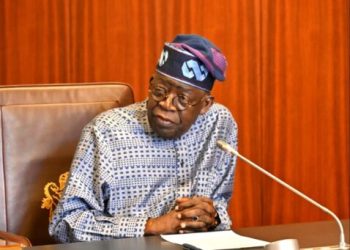
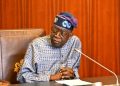
Vice President Yemi Osinbajo said on Friday that Nigerians deserve to live healthy, educated and productive lives regardless of where they reside, what God they worship or the language they speak.
Speaking at an extended National Economic Council (NEC) meeting with focus on Human Capital Development (HCD) held at the State House innAbuja, Osinbajo said the federal government was fully committed to ensuring that it positively transformed the Nigerian experience as it relates to the quality of life and well-being of its people.
He said the country had struggled with high levels of poverty for several decades in spite of its potential, as the last poverty study done by the National Bureau of Statistics (NBS) in 2012 showed that 112 million Nigerians were living in extreme poverty.
He said when the present government came into office in 2015, three things were very clear, one that it needed to move quickly and ambitiously in its response to the issues of poverty and malnutrition and disease and illiteracy.
He said: “Two, there would be no quick fixes or miracles cures as it would be a long and painful journey out of the status quo which required patience and consistence in the implementation of our interventions. Three, just as we are reaping the consequences of the poor decisions we have taken in the past, we can change the consequences that await us in the future by changing the decisions we take in the present.
“These realisations have guided us over the last three years, even as we have developed a vision for a Nigeria that is healthy, educated and positioned to fully unleash its development potential. This is what informed the creation and implementation of our Social Investment Programme, which is now the largest in Africa.
“A multi-faceted intervention simultaneously targeting poverty, hunger, unemployment, financial exclusion, and the absence of skills needed for our large youth population to thrive in the 21st century. Nigerians everywhere deserve to live healthy, educated and productive lives, regardless of where in Nigeria they live or what God they worship or what language they speak.”
He said the N-Power, jobs scheme for unemployed graduates had more than doubled to cater to 500,000 beneficiaries while Trader-Moni Microcredit scheme for petty traders excluded from formal lending opportunities had benefited well over a million people.
Osinbajo said there was also Market-Moni designed to provide loans to market women and traders, artisans, enterprising youths and small scale farmers and agric workers nationwide.
In his remarks, chairman of Nigerian Governors Forum (NGF) and governor of Zamfara state, Mr. Abdulaziz Yari, said governors have been working hard to ensure economic growth and promote transparency in governance.
He said that finance was critical in addressing all the issues bordering on HCD, adding that more efforts should be channeled toward revenue generation in order to achieve the vision of HCD.
In a presentation, coordinator of HCD Core Working Group (CWG), Mr. Yosola Akinbi, said that the HCD initiative was a response to Nigeria’s ranking as a country with low HCD.
She said the CWG selected six outcomes and several proxy measures to access and track progress across HCD thematic areas including mortality rate, malnutrition, adult mortality, expected years of school completion, quality of learning and labour force participation.
She said Nigeria’s vision to accelerate HCD by 2030 was in three strategic themes, health and nutrition, education and labour force.
In goodwill message, Country Director of World Bank Nigeria, Mr. Rachid Benmessaoud, said for the world to do well, Nigeria had to do well, adding that the federal government’s Economic Growth and Recovery Plan (ERGP) was yielding results.
Also speaking, DFID Country Representative, Mrs Debbie Palmer, said given that Nigeria would be the third largest nation in the world by 2050, it needed well-nourished, healthy, educated and skilled people.