

One of the biggest shocks in the crypto sector came a few weeks ago, when the Nigerian Central Bank (CBN) instructed financial institutions operating in the country to shut accounts that had seen crypto trading, and also identify individuals and institutions that are involved in crypto trading and investing, with severe financial penalties for those who did not comply. This was effectively a ban on crypto ownership in Nigeria, which has been one of the biggest crypto markets globally over the last few years.

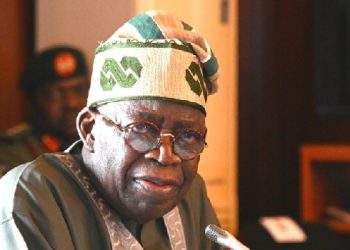
This move came as a surprise to many, but it was simply a continuation of the bank and government’s efforts to stop the flow of money out of the naira, which is the country’s fiat currency, and into other assets such as crypto or the US dollar. However, there is some hope for the crypto sector in the country now, after vice-president Yemi Osinbajo criticised this decision, stating that the monetary authorities need to regulate the sector, rather than “killing the goose that might lay the golden egg”, a reference to the potential that crypto has to transform the Nigerian economy.
Support for crypto has been constant and growing all over the world, and that is the case in Nigeria as well, where many businesses are lobbying against this decision. Several companies have integrated crypto into their operations, and so face a lot of disruption if this ban was to be enforced. One example of this is seen in the online gambling sector, where various websites now offer users the option of placing bets in their favourite games through cryptocurrencies. The benefits that this provides in terms of reliability, safety, speed and security mean that it has been a very popular move, with the crypto blackjack, for example, seeing a lot more traffic due to this change. Thus, banning crypto trading and ownership would cause a lot of disruption to various businesses, not to mention the loss of wealth for thousands of Nigerians, with the value of cryptocurrencies held by Nigerians estimated to be around $4 billion.
Therefore, the vice-president’s remarks offer a level of support that has not yet been seen in Nigeria. Osinbajo has said that there is a role for regulation to play in the crypto sector, and he has asked the central bank and other institutions to “act with knowledge and not fear.” Disruption is key to innovation, and so cryptocurrencies and blockchain need to be given room to provide that innovation, with regulations that can protect users and provide a framework for operations, rather than an outright ban on cryptocurrencies.
This development has understandably divided Nigerians, with many defending the vice-president while others have attacked him. Some believe that the central bank should be free to make these decisions, and the vice-president, which is largely a ceremonial role in Nigeria, should not get involved. Others are of the opinion that this statement shows the muddled thinking that exists within the government itself regarding crypto, and that various leaders were perhaps not consulted before this decision to ban crypto was taken. Given Nigeria’s position as one of the world’s largest crypto markets, there is definitely a need to find the middle ground here.
Nigerians have been using cryptocurrencies for their benefit for a number of years now, and it is down to the Nigerian Central Bank (CBN) and government to reduce the instability of the naira, as well as improving economic conditions, to reduce the number of people who would want to own dollars or crypto assets instead. These issues cannot be solved by banning crypto, and it is hoped that we will soon see a resolution to this problem.