

Studies have shown that terrorism does not end with only a military approach. A coercive counter-terrorism strategy has often produced negative outcomes by promoting more violence and creating humanitarian crisis.
Non-military approaches are increasingly being embraced as a more practical route to eliminating the root cause of terrorism and producing a long-term peaceful outcome. The approach is characterised by political negotiations and grassroots development. De-radicalisation, disarmament, rehabilitation and reintegration programmes are also included.
In 2015 Nigeria adopted a non-military approach to its counter-terrorism efforts. This followed criticisms of its predominantly military-based approach. The idea was to complement its overused firepower in the north-eastern region.
I conducted a study as part of the growing debate on the adoption of a non-military approach to counter terrorism in Nigeria.
In particular I focused on the de-radicalisation programme adopted by the Nigerian government in countering Boko Haram.
The design and implementation of the programme has been heavily criticised for being structurally weak and for contributing to the problem of violent extremism.
In my paper, I recommend measures that can be taken to strengthen the de-radicalisation process. I also highlight the problems and challenges in the de-radicalisation and reintegration programmes for ex-terrorists in the north-eastern region of the country.

Nigeria’s counter-terrorism programme
Nigeria’s soft approach to address the conflict in the north-eastern region started in 2013. The Goodluck Jonathan administration negotiated with Boko Haram leaders and create a framework for amnesty and disarmament.
But the move was frustrated because leaders of the group rejected the amnesty. Notwithstanding the refusal, a new agency, called “Countering Violent Extremism” was set up. It was code-named “National Security Corridor”. It’s aim was to tackle the root-causes of recruitment into Boko Haram and create a process of rehabilitating defectors of the group.
In an effort to deliver on its promise to eliminate terrorists in the north-eastern region, the Buhari-led administration made changes to the country’s security architecture. These included redesigning the national security corridor. It also led to a new de-radicalisation, rehabilitation and reintegration programme.
Code-named “Operation Safe Corridor”, the programme identified two categories of defectors: “high-risk” and “low-risk”. High-risk defectors, considered to be the most hardened fighters, would be prosecuted even after defecting. The low-risk were categorised as those with a less vicious record. The plan was that they should undergo an intensive de-radicalisation, rehabilitation and reintegration programme.
The exercise mapped out was a 52-week programme. It included de-radicalisation therapies, vocational training and basic education. Religious re-education before reintegration into the society was also included.
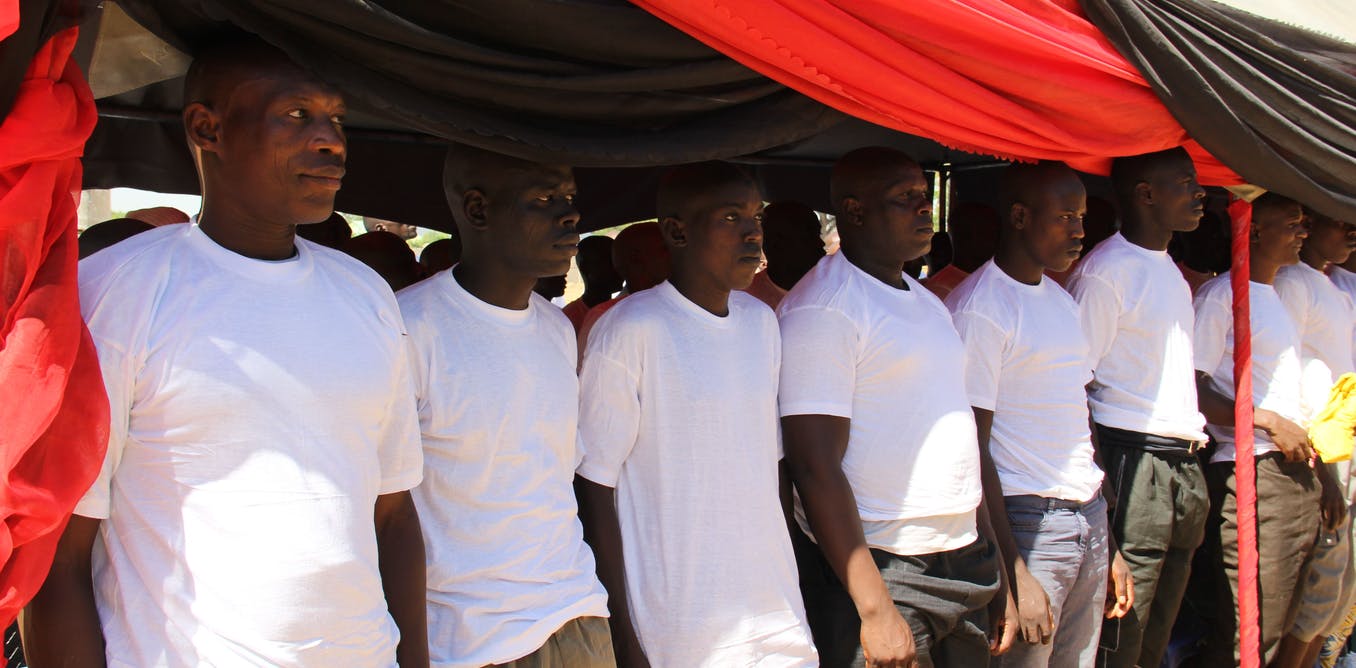
The programme is undertaken in two different rehabilitation camps: a camp in Mallam Sidi, Gombe State and the Bulumkutu Rehabilitation Centre in Maiduguri, Borno State.
The Mallam Sidi camp has male defectors. The camp in Maiduguri is for women and children.
Available data at the time of the research (2019-2020) shows that 601 repentant terrorists have so far graduated from the Mallam Sidi camp, while 1,935 have been released at the female camp in Bulumkutu.
Challenges of Nigeria’s DRR programme
Our research identified a number of major challenges in reintegrating Boko Haram ex-combatants.
The first was a lack of community engagement. The people affected in the conflict-ridden region are not significantly involved in the programme. This has led to a deepening of the negative perceptions communities have about the programme.
This has led to a total rejection of the rehabilitated defectors. We observed that the reintegrated former terrorists were still perceived as dangerous and unfit for the society by the people around them.
Experiences in Germany, United Kingdom, Norway and Sweden have shown that a successful de-radicalisation programme should be inclusive and, in particular, that it should consider the community.
Secondly, we found there weren’t enough structures for genuine reconciliation and forgiveness. For example, the programme does not address the horrendous experiences of victims at the hands of the individuals who have repented. This has led to a growing belief that the government is paying more attention to the repentant terrorists than their victims.
Failure to address this concern has frustrated attempts for true reconciliation and forgiveness. These are needed for the programme to be successful.
Thirdly, we found that there was a lack of preemptive measures to prevent radicalisation.
Many de-radicalisation programmes include preemptive strategies to discourage easy recruitment into terrorism by targeting potential recruits and not only the fighters. The United Kingdom’s CONTEST (Counter-terrorism Strategy) has four strategies one of which is the prevention of people from becoming terrorists or supporting terrorism.
The Nigerian programme does not target people who are not terrorists yet, but may have been exposed to terrorists’ ideologies.
The fourth issue was a lack of public trust. A continental survey of public trust in 37 African countries showed that Nigerians trust state institutions the least. This means that new state programmes are looked at with a great deal of suspicion.
This mistrust extended to the outcomes of the programme. People didn’t trust the claim that the ex-terrorists have been rehabilitated and were fit for reintegration.
For their part, willing defectors are cautious about the government’s promises. This makes them reluctant to drop their weapons and embrace a new life.
The fifth issue we identified was weak post-reintegration engagement plan. An amnesty programme set up in the Niger Delta, includes a plan to economically engage the defectors after rehabilitation. This was not provided in this programme.
This is a major shortcoming, considering the state of the economy. Nigeria’s economy is suffering from increasing unemployment and high poverty rates. Rising insecurity has further compounded the problem in the informal sector where the rehabilitated individuals are expected to fit in.
Reintegration without a substantial economic empowerment plan might render the whole effort useless. It could also lead the ex-terrorists back to the armed groups.
Lastly, we identified a lack of surveillance as an issue. Similar programmes have shown the possibility of recidivism by supposedly rehabilitated individuals. This has led to sophisticated monitoring systems being put in place to keep those individuals under surveillance after reintegration. While Nigeria is currently trying to update its national database, lack of a reliable one presently makes keeping tabs of ex-terrorists difficult.
Way forward
De-radicalisation and reintegration programmes are globally recognised as a useful way of addressing terrorism. They can also produce sustainable peace. However, they must be genuinely implemented to be effective.
The identified problems in the current programme must be seriously addressed. While the government does its part, citizens should also embrace the programme. No major wars ended without negotiations and concessions. Examples are the Liberian and Sierra Leonean wars. They ended with political negotiations and reintegration programmes for rebel leaders and their soldiers.