Governorships election would be conducted in Edo and Ondo state in the months of September and October respectively, except otherwise if the game change has some already conceiving a possibility of postponement by INEC, germinating from ill preparation and not ready accusation and counter accusation by both leading political parties against each others in Edo state to be precise.

Happenings in Edo State in recent days, showcase all manner of political intrigue, propaganda and threat of insecurity and malfeasance been display is worrisome, especially with concern constitutional breached on the divided Edo State House of Assembly, political charged and motivated syndromes.
Although Ondo case is yet to reach the boiling point of what the Edo political gladiators are currently displaying, however, one cannot forget in a hurry the tension in the buildup to APC governorship primary in that state and the brouhaha between governor Akeredolu and his deputy Ajayi, that resonate the spark of early 1980s Ondo governorship election crises of similar features.
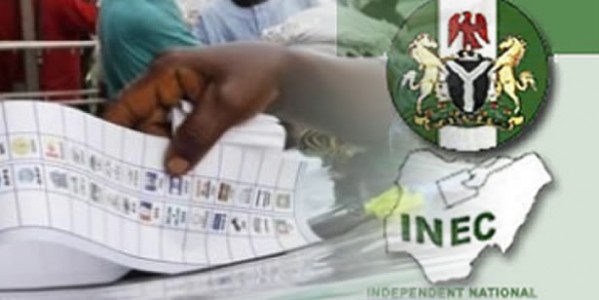
The concerns of this piece on election security cannot be separated from the unpleasant charged electioneering campaign atmosphere in the two state, with INEC and security agents been passive, we knowing full well that the trio of INEC, political parties and security agents are crucible to free, fair and credible election, although this pieces is not ruling out the pivotal role of the voters, at this point of pre-election, doing election day and post-election period.
It has been long established worldwide; most especially in stable democratic societies, that one crucial way of consolidating democracy and to out-rightly discourage democratic reversal is successful conduct of “elections within established legal and infrastructural frameworks”.
This claim is premised on the fact that election affords electorate the opportunity to exercise their civic rights to democratically choose their intending leaders on one hand, and on the other, to reject any non-performing or underperforming leader that do not merit re election.
As evident in many consolidated democracies globally, electoral process has become a veritable tool for achieving, though in part, national security and development.
What this means is that, the mere realization or understanding of the populace that they possess the requisite power to choose new set of leaders aspiring to state leadership during next elections might go a long way in restricting them from resulting into violent acts whenever there are cases of election irregularities. But for this to happen, election security that translates into securing the following: election, election materials, election personnel, electorates, as well as election environment must be put in place.
Thus, for incessant election irregularities and the concomitant violence which in many cases characterize elections in many fledgling democracies have further reiterated the need for genuine, purposeful and worthwhile election security in the forthcoming governorship election in Edo, Ondo and bye elections to be conducted by INEC before the end of the year.
Elections are key to establish a link between leadership and the public. Therefore, elections in Nigeria though seen as a means of controlling the government; within context of electorate’s participation reveal a rather disturbing ‘state’ that has called for serious concern.
“Nigerian electoral process since independence has gained an unenviable reputation for fraudulent practices. This situation has forced many to see elections in Nigeria as a mirage or a mere ‘selection’; selection in the sense that the electorate are left out of the entire system, owing to the fact that elections are conducted with or without the full participation of the electorate, who are supposed to choose those who rule over them.
The organization of elections in Nigeria have often been carried out without due involvement of the people. The system operates in a way that suggests a total disregard and misapplication of democratic ethos”.
Hence, for an electoral system to be democratic, it must provide for equal electorate and the freedom by that electorate to make a real and meaningful choice devoid of coercion or intimidation.
The above underscores the overarching importance attached to security agents and their contributions in electoral process. Election security in Nigeria, particularly since the introduction of multi-party election in 1999, has been the subject of by public affairs analyst and political observer.
These concerns have reaffirmed the fact that, the place of effective and efficient functioning of security agents cannot be overemphasized as far as the conduct of free, fair and credible election in any Nigeria democratic progress. Nigerian political science Professor Emeritus Adele Jinadu a season election expert said “election security transcends voting and other activities taking place on the voting day alone. Electoral security has been ably expressed “as the deliberate prevention of electoral governance from distortions, violations and manipulations; in such a way that legitimacy of democratic elections and democratic political succession would be guaranteed”.
As a whole, “securing election begins from taking steps necessary in ensuring the safety of the electoral process and at the same time creates a safe and secured environment, which in turn would allow electorates to participate in electoral process without undue pressure, intimidation, and fear before, during and after voting exercise”.
We can fathom electoral security to involve the physical security of items such as buildings, vehicles, election materials and gadgets; and personal security of people such as electorates, representatives of different political parties, observers, staff and workers of the body saddle with the management of elections; and the general public.
At this juncture, there exists the need to establish the fact that the onerous task of achieving free, fair and credible elections does not solely lie with INEC as election management and regulatory body alone. Other stakeholders such as the press, politicians, government, security agents and even the ordinary citizens in the country, have considerable constitutionally defined roles to play in facilitating and achieving credible elections.
But of all these stakeholders, however, the security agents (comprising personnel of Police, DSS, Civil Defence Corps, Customs, Immigration, and Road Safety Corps) are the only one constitutionally saddled with direct provision of election security in Nigeria.
However, in recent time, the military, most especially the soldiers have been involved in election security arrangement and management, although this in many quarters generate uproar and the tag “militarialization of our electoral and election processes”.
So, one should not be surprise if they are drafted into securing the forthcoming Edo and Ondo governorship election respectively.
In this wise, the question that calls for attention at this point is, how security agencies would fared in the forthcoming Edo and Ondo governorship elections? Will their role in election security guarantee an impartial and professional manner in the Edo and Ondo governorship elections?
Moreso, security agents are the main group saddled with the responsibility of protecting the integrity of the electoral process.
This explains the reason for experts opinion that say that, “the capacity and willingness of security agencies in enhancing adequate security in a non-partisan and impartial manner would contribute immensely to the credibility of elections; and that, the dearth or absence of adequate election security in any society of the world would compromise the democratic qualities of elections”.
Paradoxically, election security challenge in Nigeria cannot be totally divorced from general problems of insecurity and security environment arising from kidnapping and abduction, incessant bombings, kidnapping and abduction as well as armed robberies, yet, insecurity associated with conduct of elections has been on the rise mainly because security agents whose presence during elections is mainly to enhance the delivery of electoral services have rather chosen to remain tools in the hands of politicians for perpetrating electoral malpractices.
Indeed, many of the difficulties surrounding the problem of securing free, fair and credible elections in Nigeria right from the first postcolonial era election of 1963 till 2019 elections are due to the varying degrees of abuse of election-related procedures and rules, at all levels of electoral governance. Security agents were also accused of being responsible for some of the “fraudulent and violent practices that characterized the conduct of elections”.
Specifically, events that happened during last 2019 general elections and the Kogi and Bayelsa State governorship elections are pointer to the fact, that, security agents who in the light of the Constitution of the Federal Republic of Nigeria and other related Electoral Acts are expected to be guided by the highest sense of professionalism, to be impartial, neutral and nonpartisan among political parties or groups competing for various electoral offices are often not independent of the party in power.
Considerably, in spite of the fact that provision of adequate security before, during and after elections is part of the constitutionally assigned responsibilities and a function of security agency, security agencies were engaged to provide basic security to voters, people at political rallies and electioneering campaigns, conventions election materials, electoral staff, observers, party agents, and other stakeholders before and on the days of elections.
Contrary wise, the despicable acts and compromises of security officers in elections especially in rural polling areas were unparalleled and unrivalled in the annals of elections in the country. Several reported cases of multiple thumb printing, stuffing of ballot boxes, and many other forms of misconducts by electoral and security officers were made.
Other common low points attributed to security officials in elections are reckless abandonment of polling booths while election was going, and cases of security personnel not reporting to their deployed polling units on election days.
Others are deployment of fake security personnel and a situation where policemen intentionally conceal their identity on the day of election by not properly displaying their names and service number tags during elections.
The 2019 Kogi state governorship election comes to mind on the above. Without mincing words, history of elections in Nigeria is chequered with electoral violence of phenomenal proportion while a considerable portion of the blame is put at the doorstep of security agencies alongside the political class and some irresponsible corrupt staffs and Adhoc staff of the election management umpire.
As previously noted, untold blames and accusations often trail the performance of INEC, security agencies and political parties as well as individual politicians in all elections in Nigeria. As a matter of fact, the myriad insecurity issues peculiar to elections’ conduct and administration in the country go beyond security agencies.
This is not to explain away the malfeasances of security operatives during elections in the country; but, to point out politicians’ complicity in the whole issue cannot overemphasize. Indeed, the reckless means by which some members of political class appropriate public security and law enforcement agents for their personal purposes do constitute a major security issue in Nigerian political space. Often times, politicians’ misuse of their security orderlies to attack opponents and other members of the public have aggravated tensions around the polls in the past elections.
Our expectation in the forthcoming Edo and Ondo governorships election should not be short of unalloyed contributions of security personnel to ensure there is a free, fair, safe and lawful atmosphere electioneering campaigns for all parties without discriminating against any party and candidates around polling and collation centres.
In addition to this, guaranteeing the security of election materials, at the voting polling centres, and during elections result declaration as well as the celebration and jubilation that follow at post election.
For the, politicians we demand the unwavering patriotic displayed to tolerate and accommodate rancor free electioneering atmosphere and deceit from further reckless political display.INEC on its part must hold the sanctity of transparent and credible elections, as well as work with relevant stakeholders to deliver free, fair and credible election as provided in the electoral Act 2010 and other election guidelines as stipulated in the constitution.
While, the Edo and Ondo electorates must display absolute maturity as they cast their votes, watch their votes, counts the votes and be conscious in celebrating in outcomes.
Adefolarin Olamilekan, Political Economist and Development Researcher, wrote in from Abuja. He can be reached on: Email:adefolarin77@gmail.com