
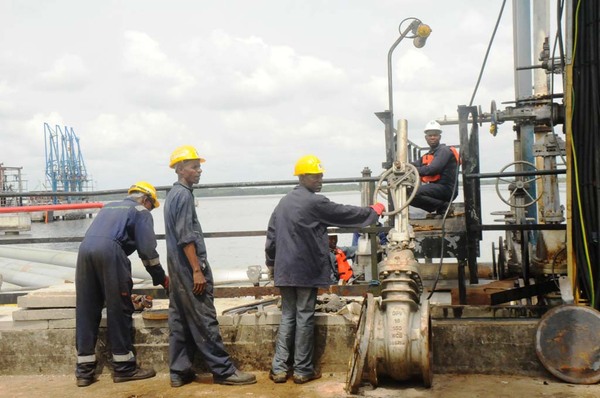
In the wake of an insurgency that devastated Nigeria’s petroleum industry and sent the economy into a tailspin, the Nigerian government granted unconditional amnesty to thousands of insurgents in 2009.

Amnesty provided a clean slate for peacebuilding measures. These were meant to safeguard the communities to which the insurgents would be returning and build capacity for peace, security and development in the oil region.
Between 2009 and 2019, the Nigerian government committed billions of dollars to the peacebuilding programme. This was to cover the stipends, education, training and entrepreneurship development costs for 30,000 participants.
The programme included the disarmament, demobilisation and reintegration of the insurgents. The federal government gave them a monthly stipend of 65,000 Naira (US$200) in temporary assistance.
Recently, some scholars explored the impact of the Presidential Amnesty Programme on human capital development in Nigeria’s oil region. Studies by Akeem Akinwale and Iyabobola Ajibola have shown that it had a positive impact and created the conditions for reintegrating ex-insurgents into civilian society.
But the studies don’t consider the role that corruption plays in post-conflict peacebuilding processes.
They don’t note that some vendors delivered sub-standard overseas training. It did not prepare the ex-insurgents for rejoining the local economy.
This gap in the literature underscores my research with ex-insurgents in Rivers and Bayelsa states. Their stories show how corruption manifests itself through the processes of peacebuilding in the region. Some ex-insurgents attribute their suffering to the mismanagement of peacebuilding funds.
Others attribute their misfortunes to the corrupt process of selecting candidates for the foreign scholarship programme. They say it mostly benefited individuals who could use their family connections.
But corruption is nothing new in the oil region. It is now part of an emerging political economy of peacebuilding in Nigeria. Corruption is what one government official was telling me about here: It is unfortunate how a well-intentioned programme became bastardised and turned out to be a drainpipe. Who are those implementing the programme? Who are those involved in mobilising insurgents for the programme? Who controls the amnesty database? Who is responsible for shortlisting the insurgents for scholarship and technical training within and outside Nigeria? If you do an audit of that tray from initiation to the completion of the amnesty programme, you will have a clear idea about the manifestation of corrupt practices.
These concerns, and the wish to understand the nature of corruption more deeply, motivated my research.
In the research field, my first contact with an ex-insurgent was in Rivers State, where I met Eze, who prefers to be identified only by his first name. I asked him about his experience in the peace process and saw that he seemed angry. He led me to an empty poultry farm that was supposed to give him an economic lifeline. In the Niger Delta peacebuilding lexicon, that poultry farm is known as “empowerment.”
But Eze did not feel empowered. He said the peacebuilding vendor contracted to set up the farm failed to deliver some of the resources the government had approved for him.
Eze was not the only victim. I realised through listening to others like him that the biggest challenge confronting the Niger Delta peacebuilding programme was corruption in the educational and entrepreneurial processes of reintegrating ex-insurgents.
The peacebuilding vendors are required to take photographs of the “empowerment” programmes they have implemented for submission to the Presidential Amnesty office. This is evidence that they have met their contractual obligations.
The programmes don’t always exist. But the Presidential Amnesty office exploits these photographs as evidence of “success” in peacebuilding interventions.
Concerns about corruption are easily dismissed as inaccurate information by the Presidential Amnesty office.
Meanwhile, since 2015, President Muhammadu Buhari has dismissed at least two coordinators of the Presidential Amnesty Programme. The dismissals have been associated with allegations of mismanagement of funds. There have been no convictions, however.
For instance, in 2018, the amnesty office received invoices from local academic institutions requesting payment for tuition and allowances for amnesty students. Alarmed by the suspicion of corruption, the then coordinator, Charles Dokubo, launched an investigation. A committee looked into the enrolment of 1,061 students and whether they were legitimate amnesty delegates.
It found that only 314 of the 1,061 delegates were legitimate participants. The remaining 747 could not be accounted for.
This is an example of how the peacebuilding programme benefits the peacebuilders while alienating the ex-insurgents.
My study allowed the ex-insurgents to give voice to their experiences. And my qualitative analysis was an important consideration in understanding the role that corruption plays in the dynamic processes of peacebuilding.
The work of peacebuilding practitioners influences the outcome of the Niger Delta peace process. To prevent a relapse into an armed insurgency motivated by the grievances of ex-insurgents who feel alienated from the peace process, I recommend a forensic audit of the Presidential Amnesty programme. It should hold the peacebuilders accountable.