
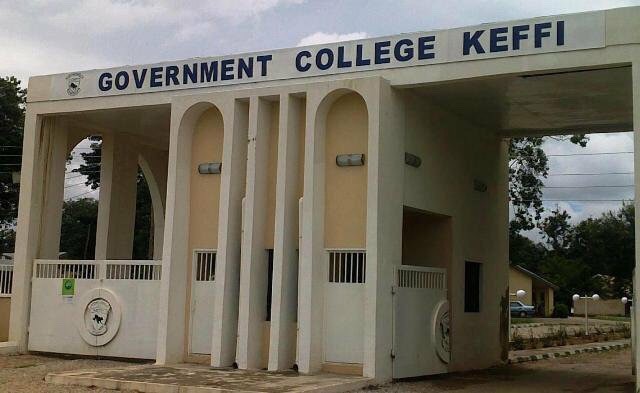
It was in July 1948, a five-year supplementary plan for educational development in the defunct Northern Provinces was adopted at the Northern House of Assembly. The resolution was still part of the speedy move by the Northern Regional Government to close the educational gap that existed between the North and the Southern parts of Nigeria. About a year later, in January 1949, during a regional council debate, Sir Abubakar Tafawa Balewa, then a provincial member from Bauchi, raised a critical question thus: “is the northern education expansion and development plan, progressing according to schedule? Expectedly, with the caliber of leadership which the country had enjoyed then, the Regional Deputy Director of Education, Mr. J.B Gott, who himself was the brain behind the educational bill, answered inter alia: “Indeed, things worked according to plans as Kaduna College moved to its permanent site in Zaria in February, while the first intake for Keffi Secondary School reports at Kaduna junction compound with 49 students”. Thus in 1949 with 49 students, against all odds, another Premier School in Northern Nigeria, being –Government College, Keffi, was born.

The college, as a matter of fact, started in Kaduna as a Middle School with the name “Government Secondary School, Keffi, “with Edward Arthur, a Briton as the founding principal. A middle school then was an intermediary class, and a transitional qualification between primary and secondary schools. And so, like a toddler with unsteady steps, Government Secondary School, Keffi had struggled along in the mud and thatch of a few classrooms in Kaduna, where indeed there was no Keffi, until five years later in 1954 when it eventually became a full-fledged secondary school, and was moved to the old Benue Plateau State (now in Nasarawa State) where the College in Keffi today exists. On completion of the relocation exercise in 1955, the school was officially opened by the then Northern Regional Minister of Education, Aliyu Makaman Bida and renamed Government College Keffi. This time around the school began to enjoy modern classrooms constructed by the colonial civil engineering firm, Costain West Africa Limited that are still standing and in use.
The initial location of Government College Keffi at Kaduna junction was not only paradox in the history of the great school. There also seems to be a dramatic significance of number nine in the character of the school. The school began in 1949 with 49 students. The founding principal, Edward Arthur, a tall, stocky fairly bald-headed Briton, was said to be about 39 years old, in 1949. Interesting again, on completing a drive through the in-road that cuts through the school’s administrative block, back to the same point, one would have succeeded in encircling number nine. Similarly it was in 1959 that the fifth and sixth forms of the college sat for the school certificate examination together for the first time. The introduction of Higher School Certificate (HSC) at the college was also done in 1959, and in 1999, the school celebrated its 50th anniversary.
The location of Government College Keffi is quite serene and soothing, and thus reflects the wisdom of our heroes past. In a little upland topography, the college tower, a red-white brick structure some 50 feet height, is probably the only school structure that can be sighted from a distance and is the only school in Northern Nigeria that has that kind of structure.
The rest part of the school is submerged in a luxuriant vegetation of beautiful species. The 500 metres in-road to the school premises is characterized by canopies that join in families to shield passers- by from the heat of direct sunshine. And, in the school premises exist various sixes and shades of well organized trees, which in various senses, provide an environment that is most conducive for the art of learning. Perhaps most interesting in the environment is a spacious flower garden, housing a family of luxuriant trees and shrubs known as “Queens Park”
Although Queens Park may not have been properly taken care of to reflect the status of a Queen, there is no doubt that the shade provided by the assorted trees remains an attraction for students, staff and visitors alike, who may want to refresh themselves anytime. The Queens Park was conceived from the early beginning of the school as one of the most enduring way of immortalizing Her Royal Majesty, The Queen of England and Head of the Commonwealth of Nations, Elizabeth II, to whom the colonial government in the country was then answerable.
Significantly enough, a rare species of palm trees were imported from England and planted in the heart of the park. The plant, which is characteristically of slim stem, rough and white bark, has today grown to a height of over 40 metres, with its little palm canopy contending for space above with the surrounding heavier trees. The palm tree has thus remained in the park as a treasure.
Another monument of historical significance in GCK in that great old school is the tower just like the Big Ben in the city of London. Square in shape, the tower is built of solid concrete bricks and measures 50 feet high. No one can vividly recall the exact date when the ancient clock engraved on the tower’s summit stopped working at 10 ‘o’clock. The clock which was cast in black metal and roman figure and embedded on a white platform, surrounded by red brick, and which used to notify the students to the school schedules, has remained a piece of beauty.