INTRODUCTION

Corruption is one of the major social problems confronting Nigeria at present. It is also the source of many socio-economic and political problems that have militated against the attain ment of economic development and equity, social ju stice, political integration, stability, democracy and security in the country. Nigerians recognize the catastrophic effects of corruption on their nation and individual lives, and the country’s leaders have not done enough in combating the malaise. That is not to say that laws, institutions and programmes for controlling corruption have not been introduced by successive government. On the contrary, every Nigeria government since 1975 introduced elaborate Laws and programmes only for officials to turn such programmes into fertile opportunity for corrupt practices and enrichment.
Consequently, there have been a geometric growth in the rate of corruption in the county. Therefore, there is need to creatively examine alternative measures to past governments failed strategies for the control of corrupt practices.
Corruption has become an issue of major political and economic significance in recent years. This has led to a resurgence of interest in analyzing the phenomenon and the diverse forms that it assumes in developing country like Nigeria, with an expectation that democratization and economic liberalization offer potential routes to dealing with the problem. Anti-corruption strategies range from institutional reforms through concerted efforts at the international level.
This has resulted in the increased electoral popularity of political parties committed to fighting corruption and the launching of high profile anti-corruption campaign by governments of various ideological lives. Specialized NGOs have been established in the country to publicize the problem of corruption and mobilise public concern around cases of malfeasance as a means of provoking an official response.
Therefore there is need to creatively examine alternative measures to past governments failed strategies for the control of practices on corruption that lead to insecurity.
CONCEPT OF CORRUPTION
Corruption have been variously defined as the use of power for profit, preferment, or prestige, or for the benefit of a group or class in a way that constitutes a bridge of law or of standard and high moral conduct. Similarly, corruption has been defined as “someone in a position of public authority because of private-regarding motives such as wealth, power or status.” These are two if the most elaborate and comprehensive definitions. They combine elements of bribery and abuse of office for non-financial gains in their definitions of corruption.
Corruption is sometimes used as synonymous with bribery, which is defines as a price, reward, gift or favour bestowed or promised with a view to pervert judgement or corrupt the conduct especially of a person in a position of trust. Bribery is a dimension of corruption, and is not the only reason for an abuse of office. An official may abuse his or her office for financial gain or for power and prestige within his or her community.
CONSEQUENCES OF CORRUPTION
Corruption widens inequality, aggravates mass poverty and adverse social welfare conditions, militates against efficient resources planning and allocation undermines economic growth by discouraging investment, compromises economic efficiency, results in high government expenditure as a result of inflation of contracts an d cost of supplies. There is no doubt that corruption is poisonous to long term development, democracy and security. Corruption has contributed to the social political and economic crises that have engulfed the nation since independence.
TRACKING AND CONTROLLING CORRUPTION IN NIGERIA
In the existing literature the approach to analysing corruption determines the means advocated for tackling the problem. For example advocate of public choice theory place their faith in economic liberalization and curbs on the power of the state as a means of reducing the scope for seeking activity. While economic liberalization can help to reduce corruption by predatory state elites, there is a need for careful monitoring and regulation of the reforms to ensure that the benefits which accrued from this process are not appropriated by these same elites. Moreover, the absence of alternative economic opportunities limits the scope of reducing corruption if the public sector remains the primary source of income and formal employment.
As with any form of pathology, both preventive and control measures are desirable.
SECURITY IMPLICATION
The security of the nation remains not just the primary concern of the current government but the number one and most important concern. From the beginning of time, security has always been an issue and will continue to be an issue. Indeed, the emergence development and dynamics of organized society, and by extension the nation-state have made issues of security more complex, necessary and urgent.
National security is a collective responsibility and process of which every citizen is a part and to which they must continue to subscribe for maximum protection and common good. As we develop a culture of alertness, our states, local governments and communities, faith-based and civil society organizations, businesses and indeed every stakeholders must be partners in ensuring safety and security of our nation.
In a country like Nigeria where corruption is gradually becoming a culture and impunity derive, where money and resources meant for security sectors are diverted to private pocket and arms and ammunition are purchase through the back door and black market does not augur well for national security. The security of the people will be guarantee if there is less corruption.
ROLE OF RELIGION IN THE CRUSADE AGAINST CORRUPTION IN NIGERIA
Nigeria’s return to democratic governance is dictating a redefinition of the relationship between the citizens and the state. Efforts to reconstruct civil institutions are facing significate challenges resulting in social configuration. In the face of civil, political and economic crises come the challenge to safeguard the justice system.
Sectarianism is a phenomenon that, undoubtedly, influences the internal security and political stability of Nigeria as an entity. It has rippling and negative effects on her national security, stability and integration. The manipulation of religion and ethnicity has been a major impediment to Nigeria’s attempt to launch herself into greatness and a force to reckon with. Ethnicity has become an imaginary boundary that separates a citizen from another citizen and a community from another community. It has become such a potent tool for mobilisation and manipulation in Nigeria.
In Nigeria, religion has been so manipulated that virtually all institutions in the public and private sectors have been polarised along religions lines. Civil servants, community and social workers are usually victims of intimidation and oppression in their places of work. Survival and job security are strongly base on who is of the same religion with the boss.
Religion is thus, not used to serve its purpose. Religion should be used as a tool of actualising our National objectives in fighting corruption. It should provoke a meaningful dialogue to create a better understanding and resolve issues that have become obstacles to our national progress which is corruption.
Our religion value should induce adherents to appreciate the great assets derivable from working together as Nigerians in honesty and for a better Nation Building.
CONCLUSION
The complementary strategies have to be devised to tackle forms of corruption and security at the international, national, local and institutional levels, involving government, civil society, the private sector and international actors. While experience suggests that sustainable anti-corruption efforts need to be country-specific, they can be informed by lessons from elsewhere and supported by concerted action at the international level. Clearly excessive reliance on one single strategy derived from the mode of analysis employed limits the scope and potential impact of anti-corruption efforts.
Corruption is a major source and consequence of important socio-economic and political problems that have undermined development, democracy, social justice and security. Some ways of addressing this problem include drastic reduction in poverty, increased universal access and equal opportunity to social and economic services, re-orientation of ethnicity, religion and state indigenship, mass education on the nature and consequences of corruption. Strong commitment by government to punish corrupt officials irrespective of the antics of their collaborators and clients to safe guide national security.
Lack of freedom of access to public information for Nigerian citizen is the major explanation for the near failure of the anti-corruption crusade in Nigeria. It creates opportunity for government to fight corruption selectively, which also undermine the security of the people politicize the struggle and thereby undermine it credibility. It also alienates the citizens from government and so frustrate the development of one the success factors for the struggle, namely the total commitment of the people to the struggle on anti-corruption.
Furthermore, the lack of freedom of access to information despite the existence now of Freedom of Information Act, some of the public institution still live in the past by relying in the Official Secret Act, which negates the entire Code of Conduct regime based on declaration of assets and investigation of the public officer on complaints by members of the public. Besides, the dominance of the executive in the struggle and the negative approach to fight corruption is not good for democratic development in Nigeria.
The religious institutions must also join the crusade against corruption among their members and in their various institutions.
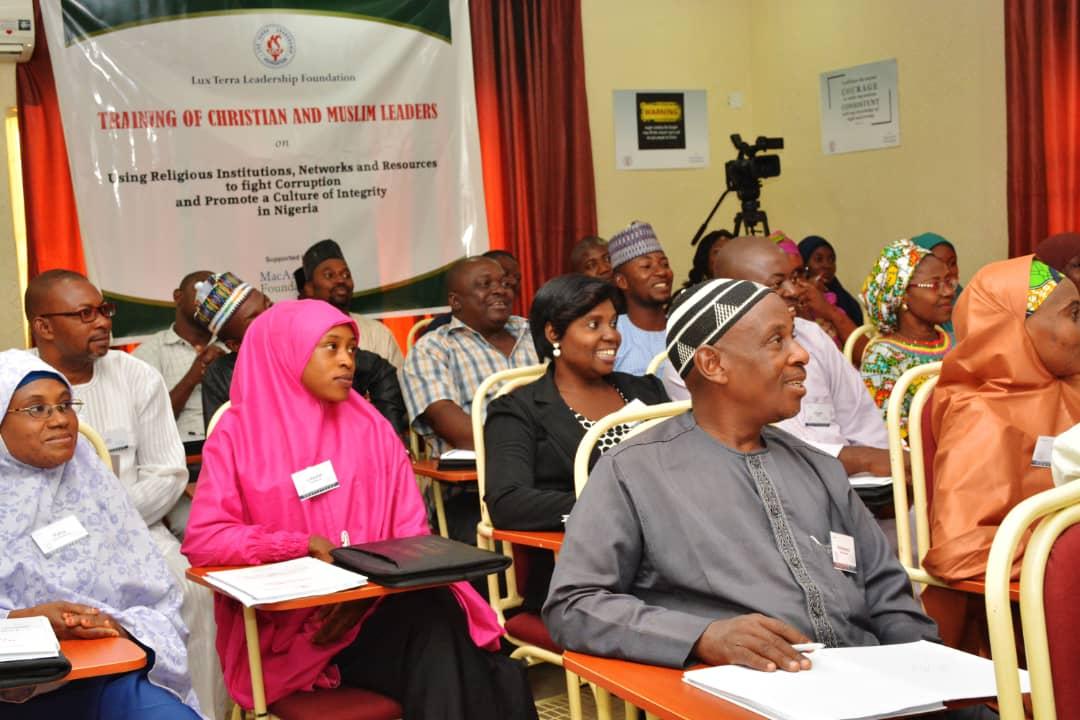
Idris Maliki Abdul presented this paper at a one-day forum organised by Lux Terra Leadership Foundation in collaboration with the Islamic Education Trust on July 20, 2019 at Lokoja, Kogi state.