It has become common to argue that most Africans are not that committed to democracy. Commentators often suggest that Africans care more about development than democracy, and that voters – especially those in rural areas – don’t really understand democracy. They would thus happily trade away their political rights for a “strong man” who can get things done.

This narrative has proved to be durable despite being wrong.
In our new journal article for the Keywords series of the African Studies Review, we investigated three issues. First, is there support for democracy in Africa? Second, what kind of democracy do people want? Third, why are the desires of African citizens so often silenced?
Drawing on survey data collected by the Afrobarometer between 2016 and 2018, we show that strong majorities think that democracy is the best political system for their country.
Contrary to claims that “Western style” democracy is “unAfrican”, we find widespread support for a form of consensual democracy, which combines a strong commitment to political accountability and civil liberties with a concern for unity and stability.
Support for democracy remains strong
Democracy in Africa has come under considerable pressure over the last decade. Satisfaction with the way that democracy is performing has fallen. This is in part due to a decline in public confidence in the quality of elections – how free, fair and credible they are.
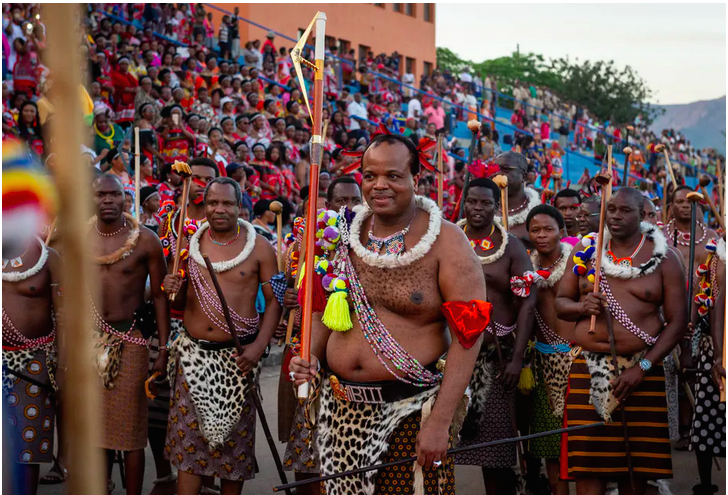
We argue that this has only had a modest impact on support for the principle of democratic government, in part because African citizens continue to view authoritarian rule as a worse option. Of the 35 countries surveyed, the proportion of citizens who suggested that non-democratic political systems might be preferable only exceeded 20% in eSwatini and Malawi.
This figure is now likely to have declined in both countries. Malawians faith in democracy was revived by a peaceful transfer of power in 2020. And the people of eSwatini have been protesting against a failing authoritarian regime.
Even in states in which the reintroduction of multiparty politics has been associated with political controversy and conflict, such as Cote d’Ivoire, Togo and Uganda, more than three quarters of citizens say that democracy is preferable.
Consensual democracy
It is, therefore, time to stop doubting that African citizens want democracy, and start asking what kind of democracy people want. We argue that there is widespread demand for a form of consensual democracy, in which a desire for elections and checks and balances on those in power goes hand in hand with a concern to maintain national unity.
Consensual democracy has four main features:
Multiparty elections
We show that the vast majority of Africans support selecting their government through multi-party elections. Three-quarters of those surveyed agreed that We should choose our leaders in this country through regular, open and honest elections.
Almost 65% also agreed that “many political parties are needed to make sure that (the people) have real choices in who governs them”. Most rejected the idea of one-party rule.
Political accountability
Our article also shows that most Africans want political accountability and the rule of law. Over three quarters of respondents agreed that The constitution should limit the president to serving a maximum of two terms in office.
Only 34% agreed that the government getting things done was more important than being accountable to citizens.
Civil liberties and political rights
Respondents also wanted to be able to express their own opinions and engage in political activities. Over three quarters (76%) agreed that a citizen’s freedom to criticise the government was “important” or “essential” for a society to be called democratic.
This extends to the right of association, with over 60% of individuals believing they “should be able to join any organisation, whether or not the government approves”.
Consensual politics
Strong support for rights, elections and accountability goes hand-in-hand with a concern to prevent “excessive” freedom and competition, lest they lead to disunity and instability.
Many citizens worry about violence around elections; they want parties to put aside their differences and work for the common good.
Most respondents were therefore against the use of street protests to settle disputes, even though they often sympathised with protesters’ aims.
The exceptions that prove the rule
There are of course variations in how people feel about these issues, both across the continent and within countries.
Respondents in eSwatini, Lesotho, Madagascar, Malawi and Mozambique were less committed to elections, but only in Lesotho did this drop below 50%.
Namibians and South Africans were more willing to trade accountability off against efficiency – perhaps because of majority support for the ruling party.
Yet, what is striking is the consistency of support for the four pillars of consensual democracy across the continent. What does this mean for African politics? Why is this reality not more accepted?
Our article outlines three key episodes in which support for democratic government has been silenced. We also identify vulnerabilities that authoritarian leaders could exploit.
Leaders who can persuade citizens that their country faces a grave risk of violence and instability may be able to legitimise backsliding on democracy – whether or not the risk actually exists. This is a cause for concern because supporters of democracy in Africa don’t always reject all authoritarian alternatives.
Yet, as our study shows, the overwhelming majority of Africans support consensual democracy.
Lazy argument
The argument that multi-party politics is incompatible with African ways of life stretches back to racist colonial officials. It was also used by nationalist leaders to justify creating one-party states after independence. But it is not true, and has become a lazy excuse for authoritarian regimes that are neither popular nor legitimate.
In a decade in which activists have risked their lives to advance democratic causes in Algeria, Angola, Burkina Faso, Cameroon, eSwatini, Ethiopia, Gambia, Kenya, Mozambique, Nigeria, Sudan, Tanzania, Togo, Uganda, Zambia and Zimbabwe, it is time to recognise that most Africans do not want authoritarian rule.
It is both misleading and patronising to suggest that democracy has somehow been imposed by the international community against the wishes of ordinary people. Instead, it has been demanded and fought for from below.