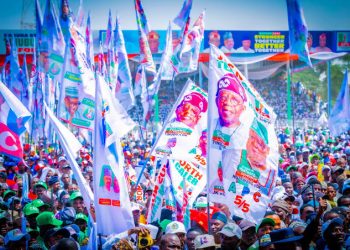

Greed and lust for power may redefine our model of democracy if political parties continue to play the ostrich and allow selfish interest to replace national interest. The recent All Progressives Congress (APC) registration/revalidation of membership exposed the mindset of its leaders. In some states of the federation, the exercise was hijacked by a selected few shylocks for fear of the obvious. Genuine persons that came forward for registration were denied the right to be registered.

As if it was a planned denial, each polling unit within the country, was given only 200 membership cards for the exercise which created enough room for hoarding by those charged with the exercise in the local governments. Most executive committee members in APC controlled-states became tin-gods overnight, in desperation to protect certain myopic interest while forgetting the fact that a right denied is an invitation to factionalization by the denied. APC should put that at the back of its mind most especially as President Buhari who provided credibility cover to the party is exiting in 2023 and has no any other person within its fold with such credibility rating to package the party for ease of marketing. Rigging cannot do the magic and money bags can only be fooled at the most appropriate time.
Although, the national committee presiding over the party affairs has appointed a committee to entertain complains against the registration/revalidation exercise, still, there is enough room for factionalization and anti-party at the most appropriate time to settle scores.
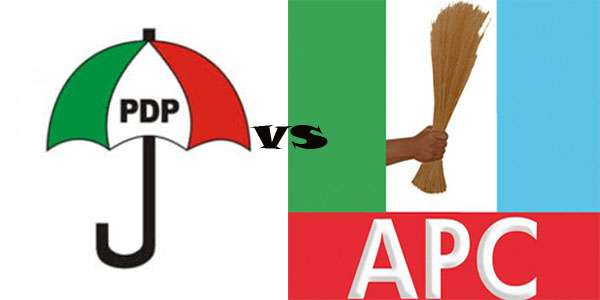
As the polity journeys to 2023, there is a sudden phobia for zoning within the two largest parties, APC and PDP. Yet, both parties are bound to make decisions on whether the presidency is to remain rotational or zoning should be put in abeyance.
Zoning is on the front burner as Nigerians gaze at 2023. The reason is not farfetched. The number one seat, which is usually a bone of contention, is never a unifying factor in a country that is divided by ethnicity, religion and official nepotism.
It is also because presidential power is perceived as an ethnic tool for bargaining for more political opportunities and promotion of sectional interest by the leadership.
In essence, the tribe producing the president anticipates a sort of comparative advantage, which the number one citizen can secure, to the exclusion of other tribes.
The exceptions are too few. But, generally, the trend has persisted because the presidents of Nigeria seem to lack national outlook.
The reality has fuelled the intense agitation for the presidency, and a fierce contest, not only among individuals and political parties, but also among diverse and antagonistic tribes and ethnic groups.
The usual complaints revolve around domination, marginalization, exclusion and suppression of other tribes by the ‘reigning ethnic group’ at a given time.
Under the prevailing political tension unleashed by the intense struggle, the notion of merit takes a back seat. But, this argument may also be subjective. There are competent Nigerians in the North and South who can pilot the affairs of the country with passion.
The battle for zoning underscores a competition that goes beyond political parties. Those who usually coordinate the battle on behalf of the competing races are not only the ethnic organizations serving as mouthpieces, but few privileged principals and principalities whose influence could overwhelm the political parties.
Due to the subsisting identity, integration and penetration crises, there is no tribe that will not be a complainant when its kith and kin are not holding forte in the levers of power, particularly Aso Rock Villa. The antidote is the emergence of a nationalist president who will generally regard the entire country as his/her constituency and resolve to promote equity, fairness and justice for all. The search for such rare candidates should be priority of the parties.
Zoning is inevitable and non negotiable, although it is not a constitutional matter worth a public debate. The national caucuses of political parties usually adopt zoning without publicizing it, to give a sense of belonging to the different ethnic groups, which serve as the pillars of the country.
However, political parties have a way of deemphasizing the ethnic groups by trying to premise the decision on rotation or zoning on the North-South dichotomy. Yet, it is evident that the tribes Hausa/Fulani, Igbo and Yoruba are more vociferous in their demand for the slot than the “North” and “South” or each of the six geo-political zones.
That was why the attempted abrogation of zoning generated uproar in the PDP, when the Sen. Bala Muhammed Committee Report recommended that the party’s presidential ticket should be thrown open to all the six geo-political zones.
Reactions promptly came, not from the party based leaders from the geo-political zones per se, but from ethnic activists and cultural organizations domiciled in Yoruba and Igbo lands. They feared that a pattern of leadership recruitment was about to be jettisoned.
When the late military Head of State, Gen. Sani Abacha, evolved the idea of six geo-political zones, he had zoning in mind. In post military era, it was expected that it would become a factor that will promote unity and hope in the country.
The presidency is more powerful than all the 36 state governments and the 774 local governments combined. It generates more money and controls more resources. There is the pervading feeling that when somebody from a particular tribe is in the saddle, it is the ethnic group that is indirectly ruling.
Also, the merit is that through zoning, there is no perpetual domination, but the prospects, if not certainty, of power rotation.
The PDP, then as the largest political party in Africa was the first to uphold zoning by entrenching in its constitution. Leaders of the party described it as “turn by turn”. The core element of zoning envisaged by the party included rotation of the presidency, not among the six geo-political zones, but between the North and the South. But, there is also a provision for the distribution of the six unequal topmost federal offices among the six geo-political zones to guarantee a sort of accommodation, relevance and a sense of belonging to the zones.
According to the PDP Constitution, zoning is sacrosanct. Article 7(2)(c) of the party’s constitution states that “in pursuance of the principle of equity, justice and fairness, the party shall adhere to the policy of rotation and zoning of party and public offices, and it shall be enforced by the appropriate executive committee at all levels”.
But, zoning is not restricted to the presidential ticket alone. By implication, once the presidency is zoned to a particular zone, the other key offices are zoned to other zones. The offices are Vice-president, Senate President, House of Representatives Speaker, Secretary to the Government of the Federation and National Chairman of the party.
The PDP has labored all along to maintain fidelity to zoning, until in 2019 when former president Jonathan truncated the arrangement. For doing that, he lost at the poll by internal protest votes coupled with the perceived credibility of his strongest opponent, Muhammadu Buhari of All Progressives Congress (APC).
APC had no better option than to follow the PDP example when its founding fathers agreed that power should shift from the North to South after the exit of President Muhammadu Buhari in 2023. That’s why chieftains, including Governors Ganduje, Masari, Zulum and Sen. Ali Ndume from Borno South Senatorial zone, Minister of Labor and Employment Chris Ngige and his Works and Housing counterpart, Babatunde Fashola are asking their party to stick to the fundamental agreement to ensure zoning and power shift from the North to the South in 2023.
Although the APC is inclined to pretension about zoning, there is a particular clause in its constitution that points to a semblance of zoning. A proper legal interpretation of the hidden clause is required so that proper operative content can be given to it.
According to Article 20(iv) (d), “The National Working Committee shall be subject to approval of the National Executive Committee make rules and regulations for the nomination of candidates through primaries. All such rules, regulations and guidelines shall take into consideration and uphold the principle of federal character, gender balance, geo-political spread and rotation of offices to, as much as possible, ensure balance within the constituency covered”. The whole country is the constituency of the president.
When the body language of the parties supports zoning, aspirants outside the targeted zones are at liberty to contest in the exercise as their constitutional right. But, during the real primary election, they contest in vain.
Honestly, from my objective opinion, it is too late to abandon what has become a trend. The consequences are better imagined than said. All elective positions for the 2023 general elections from local government councillorship to the president ought to be shared equally among the components if the democracy means anything to us. We are tired of retrogressive politics anchored on primitiveness and parochial sentiments loaded on the innocent electorates and funded either from public wealth or stolen monies. We should resist imposition, dictatorial tendencies and the godfather syndrome for the good of the system.
Muhammad is a commentator on national issues