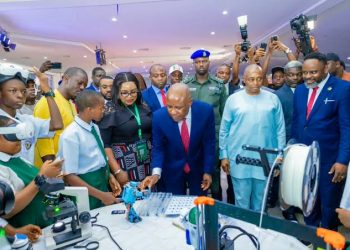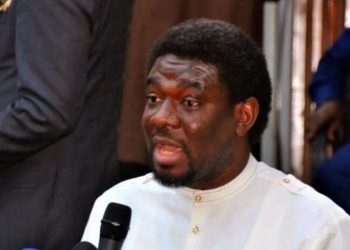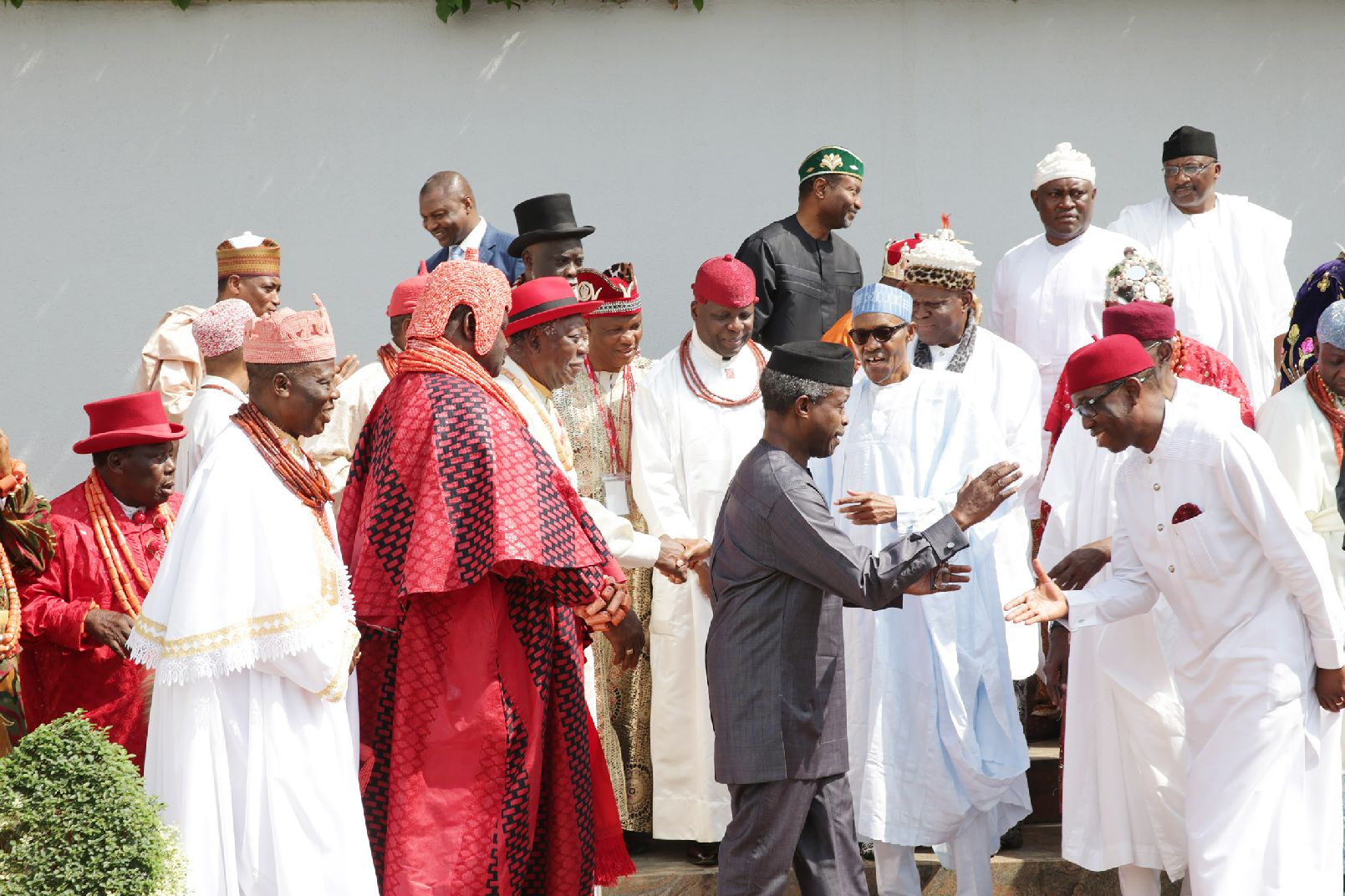
Leaders of the Niger Delta region including aggrieved youths, governors and ministers on Tuesday held a meeting with President Muhammadu Buhari at the State House, Abuja.

The meeting was held as part of measures meant to put an end to the renewed spate of militancy in the region. In the meeting, a wish list of 16 points was presented to the President.
According to the leaders, with the 16 points, “quick wins can be achieved and can restore hope and confidence in a region that has grown skeptical of dialogue and engagements that have hardly produced tangible results”
Details of the 16 points include:
1. The Presidential Amnesty Programme: They complained that out of the five components of the disarmament and retrieval of weapons from the ex-militants, only the disarmament and demobilization component is being implemented. Tensions over the fate of the Niger Delta Amnesty Programme is as a result of lack of genuine exit strategy. They want the Programme reviewed to reappraise its core mandate to provide a robust exit strategy, in order to transit recipients into jobs, effectively integrate them and free them of over-dependence on stipends, so that their new-found skills would be of benefit to themselves and the larger community.
2. Law and Justice issues: In view of the security situation in the Niger Delta, a number of pending law and justice issues regarding some aggrieved groups and individuals are yet to be resolved. It is important to address these issues urgently as a step towards lasting peace.
3. The effect of increased military presence in the Niger Delta: The increase in military presence has resulted in invasion of communities, displacement of persons, harassment and other firms of human rights abuse. They want government to halt the escalation of tension in the region.
4. Plight of internally displaced persons: They want relevant government agencies to take urgent measures to meet their immediate needs of those displaced by upsurge of insecurity in the region.
5. The Ogoni clean-up and environmental remediation: They want government to speed up the exercise. They want government to enforce zero gas flare deadline. They want the devastating effects of coastal erosion and lack of an effective shoreline protection for the coastal communities tackled urgently. They ask federal government to commission a region-wide credible assessment of the impacts of crude oil pollution of the environment in the region and undertake to enforce environmental laws.
6. The Maritime University Issue: They want prompt take-off of the Niger Delta University.
7. Key regional critical infrastructure: They want completion of of East-West road, full implementation of the rail project that is designated to run through the Niger Delta region to Lagos.
8. Security surveillance and protection of oil and gas infrastructure. They want pipeline surveillance contracts given to the communities rather than individuals… Communities would see their responsibility over the pipelines as protection of what belongs to them.
9. Relocation of Administrative and Operational Headquarters of IOCs: The headquarters of most oil companies are not located in the Niger Delta Region. As a result, the region is denied all the developmental and associated benefits that would have accrued to the region from their presence. It has therefore become imperative for the IOCs to relocate to their areas of operation. This move old create a mutually beneficial relationship with the host communities.
10: Power supply: They advocate a power plan that strongly ties power supply in the region to gas supplies, thereby giving all sides a stake in improved stability.
11. Economic development and empowerment: They want Brass LNG and fertiliser plant project including the Train 7 implemented, reviewing and updating the national gas master plan to integrate the economic interests and industrialization of the region, creating a Niger Delta industrial corridor that would process some portions of the bat hydrocarbon natural resources, expediting work on the export processing zones, harnessing the huge rain-fed agricultural potentials of the area through the development of farms estates, fishery development projects and Agro-Allied industrial clusters etc.
12. Inclusive participation in oil industry and ownership of oil blocs. They want the federal government to enunciate policies and actions that will address the lack of participation as well as imbalance in the ownership of oil and gas assets.
13. Restructuring and funding of the NDDC: The restructuring will ensure it refocuses as a true interventionist agency to respond swiftly to the yearnings of the grassroots of the Niger Delta. Communities must be able to have a say in what projects come to them and also want full implementation of the funding provisions of the NDDC Act.
14. Strengthening the Niger Delta Ministry: They say the era of abysmal funding should end. The ministry should be adequately funded and strenghtened to fulfill the purpose for which it was created.
15. The Bakassi Question: They recommend a comprehensive resettlement plan including development for the host communities and displaced population to reduce the risk of turning them into a stateless people.
16. Fiscal federalism: The region supports the call for true federalism and urge the federal government to treat the matter expeditiously.