

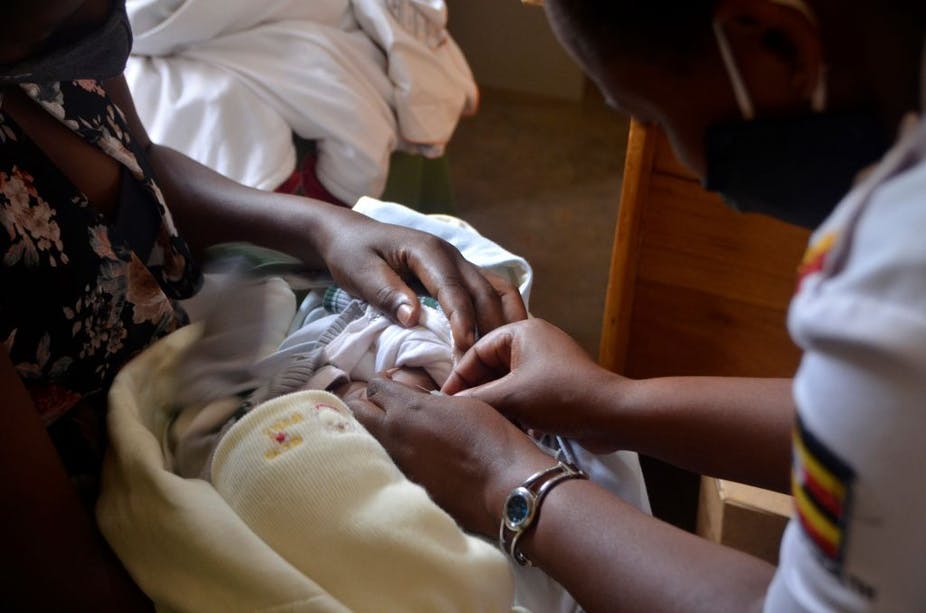
In a time when the world is focusing on COVID-19 vaccines, the World Health Organisation (WHO) has highlighted the importance of routine immunisations for diseases such as measles, tetanus and polio.

Although immunisation saves millions of lives each year, progress in vaccine coverage remains highly uneven, both between and within countries. Despite considerable progress over the past two decades, the situation is particularly worrying in Africa. Nearly half of the world’s unvaccinated and under-vaccinated children live in this region.
Even where vaccines are available, one barrier to progress is vaccine hesitancy: the reluctance or refusal to vaccinate. In 2019, the WHO listed vaccine hesitancy among the top ten threats to global health. Building trust in vaccination is a key aspect of this year’s WHO immunisation campaign.
Vaccine hesitancy is not new. Mistrust in authorities has been shown to negatively affect vaccine uptake in high and upper middle income countries such as Russia, the US, France and Croatia. But there is less research quantifying vaccine hesitancy in lower income countries.
Our latest research shows that child vaccination rates in African countries are lower in areas where the local population displays high levels of mistrust in local authorities.
Finding ways to improve vaccination uptake may help countries to reach the Sustainable Development Goals target of reducing under 5 mortality to no more than 25 per 1,000 live births by 2030. Currently, two-thirds of the 53 countries that are not on course to meet this goal are located in Africa.
Linking vaccination uptake and trust in authorities
We looked at the status of vaccinations for more than 160,000 children across 22 African countries, and matched it with information on the levels of trust people had in local and national authorities.
Information on vaccination status was obtained from the Demographic and Health Surveys. Information on institutional trust comes from the Afrobarometer surveys. We measured the degree of trust at the highest subnational region within each country. We calculated the share of the population that said they had no trust at all in the president, parliament, electoral system, courts or local government.
Various socio-economic characteristics at the individual, household and regional level may affect the affordability and accessibility of vaccination services, and hence vaccine uptake. In our statistical analysis we isolated the effect of institutional mistrust from these variables. To do so, we compared households with similar socio-economic characteristics, in the same area, with similar access to healthcare facilities.
We found that higher mistrust was associated with lower vaccination uptake.
When mistrust in local government increased by 10 percentage points, children living in that region were 11% more likely not to receive any of the eight basic vaccines. These were the BCG vaccine (to protect against tuberculosis); three doses of the combined diphtheria, pertussis, and tetanus vaccine; three doses of the polio vaccine; and a dose of measles-containing vaccine. And these children were 3.4% less likely to receive all eight of the basic vaccines.
Our study is the first comprehensive attempt to quantify the role of institutional mistrust on vaccine uptake in Africa. But our findings are in line with qualitative case studies from many African countries. These include the Democratic Republic of Congo, Liberia, Nigeria and South Sudan.
The most famous case of vaccine hesitancy on the continent is the boycott of the polio vaccination campaign in the early 2000s in Nigeria. It led to the outbreak of a disease that had nearly been eradicated.
The importance of institutional mistrust was also highlighted during the Ebola outbreak in West Africa in 2014. For instance, in Liberia, communities rejected health workers and did not follow the health recommendations. Such resistance was not explained by people’s understanding of Ebola symptoms or transmission. Respondents rather indicated that they could not trust the capacity and integrity of the government institutions to protect them.
Policy implications
There is an urgent need to recognise the importance of mistrust in vaccination campaigns. Research has shown that immunisation is one of the most cost-effective public health interventions. The World Health Organisation estimates that vaccination prevents 2-3 million deaths each year.
In a world where the global rollout of vaccines is considered crucial in bringing the COVID-19 pandemic to an end, boosting immunisation seems more relevant than ever. The pandemic has caused the cancellation of supplementary measles immunisation campaigns and puts the delivery of critical routine immunisation services at risk.
An obvious implication of our findings is that the benefits of vaccines should be communicated better. Myths and misunderstandings must be addressed. But raising awareness is unlikely to be enough unless people trust those providing the information and delivering vaccination services.
It takes considerable effort to build trust. Building trust usually starts by recognising people’s concerns and then providing reliable information from credible sources, using terms that are not confusing or too technical.
To guide policy, it is important to identify where mistrust comes from and engage with communities and trusted leaders. One example is the so-called CORE projects that managed to address vaccine hesitancy in North East Nigeria. They created trusted spaces for community dialogue in a challenging environment.
Our study calls for scaling up and adapting such initiatives to protect the 2.6 million children under 5 who are estimated to be at risk of dying from vaccine-preventable diseases by 2030.