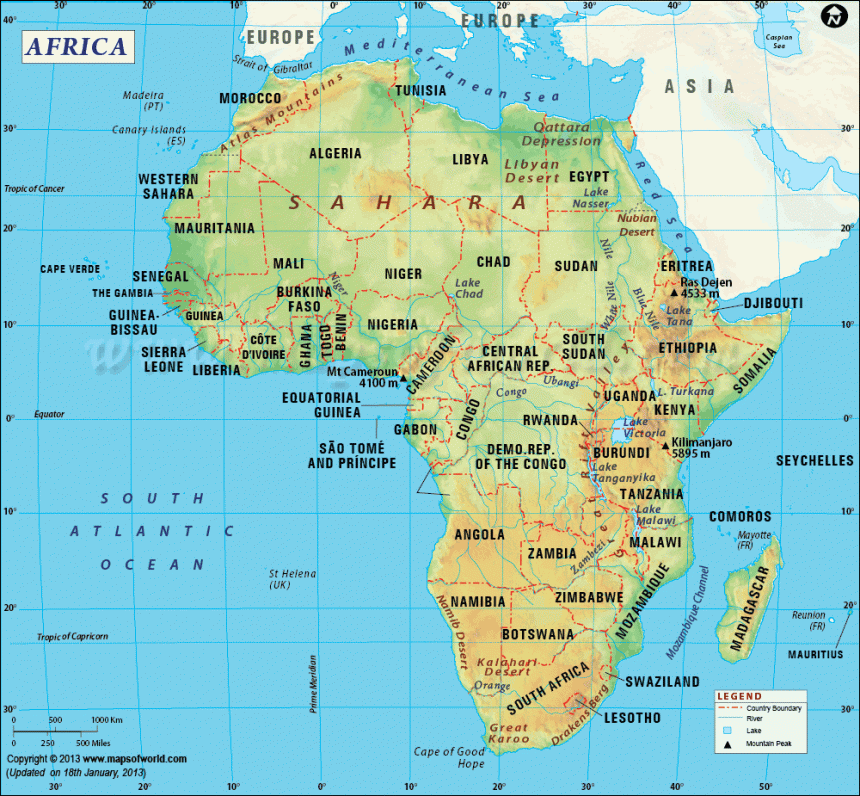
Once again, African countries are confronting overwhelming debt burdens. According to the most recent World Bank debt statistics, they owe a total of $493.6 billion in long term debt to their foreign official and commercial creditors. About one third, $117 billion, is in the form of tradeable bonds. In 2019, many African countries spent more money servicing their debts than they did on health.

In 1990 many African countries had unsustainable debts. They owed $255 billion to their official creditors and $28 billion (17% of the total) to private creditors.
Bilateral and multilateral creditors launched the HIPC initiative in 1996 to help highly indebted poor countries. Thirty-one African countries benefited from this debt forgiveness. Private creditors did not participate.
Unfortunately, this created an opportunity for speculators, now known as vulture funds. They bought the debts of countries like Zambia, the Democratic Republic of Congo, Ethiopia and Uganda very cheaply. They demanded that the countries meet their contractual obligations and pay them in full. They sued any country that refused. This strategy earned them returns of between 300% and 2,000%.
To date, they have used this strategy – or are using it – against approximately 15 African countries.
The legacy of these vulture funds complicates efforts to help African countries deal with their current debt challenges. Their creditors are concerned that any relief they provide will be captured by non-participating creditors, including vulture funds, and will not benefit the country and its citizens.
The international community is attempting to deal with the situation. The Paris Club, which represents many bilateral official creditors, and the Institute for International Finance, which represents 450 banks and financial investment firms, have announced that they are collaborating on an initiative to temporarily suspend debt payments by the poorest countries.
The African Union and United Nations Economic Commission for Africa have announced that they are looking at the feasibility of creating a special purpose vehicle that can swap African bonds for debt instruments with more generous terms.
It is too soon to know if these initiatives will succeed. However, it is clear that neither deals effectively with the risk of vulture funds.
But I believe that, with two adjustments, the proposal being formulated by the African Union and the United Nations Economic Commission for Africa could address the vulture fund risk.
Reining in the vultures
The shortcoming of the Paris Club-Institute for International Finance initiative is that it does not affect the ownership of the bonds. This is a problem because, given the severity of the current crisis, many bondholders are likely to be attracted to the option of selling their discounted bonds to vulture funds rather than participating in any future African debt restructurings.
For its part, the African Union-African Commission initiative would change the ownership of the bonds. But the scheme is voluntary. The creditors can choose to swap their bonds for the debts of a new entity holding risky assets. Therefore, vultures can decide that they don’t want to forgo the opportunity for large future profits. Unless the special purpose vehicle can buy a critical mass of outstanding African bonds, the vulture funds will still complicate future debt renegotiations.
But two adjustments to this special purpose vehicle – perhaps named the DOVE (Debts of Vulnerable Economies) fund – could address the vulture fund risk.
First, instead of creating new bonds it should buy the bonds of African states at their current steeply discounted market prices and promise to hold them until maturity. It would implement a standstill on any payments due on these bonds until the global health crisis abates. The fund would also pledge that once the global economy begins to grow again it will work with African debtors to ensure that the debt is not an undue burden on their efforts to rebuild their economies.
It would stipulate that any future debt renegotiations will be consistent with all applicable international standards such as the UN Guiding Principles on Business and Human Rights, the Principles on Responsible Investment, and the UNCTAD Principles on Promoting Responsible Sovereign Lending and Borrowing.
Second, the special purpose vehicle would advocate that all private sector creditors participate in a comparable standstill, both on debt payments and debt trading, and consider renegotiating the debt of the participating countries after the crisis ends.
It can remind them that most of the leading financial institutions in the world are signatories to the Principles on Responsible Investment, and have policies that require them to be socially and environmentally responsible in all their operations. Many of them also have human rights policies that confirm that they respect international human rights.
In addition, many of them have acknowledged that their companies should serve the interests of all their stakeholders and should not prioritise the interests of their shareholders.
Their stakeholders include their borrowers and those innocent third parties – such as citizens – affected by their actions and decisions.
The special purpose vehicle should also have the following characteristics.
First, it must be independent of both creditors and debtors. To demonstrate its independence the fund should be managed by an independent board representing all stakeholders.
These include the debtors and their citizens, the creditors and the investors in the new fund.
Second, the fund can be established in a neutral jurisdiction but it should be based at an African institution such as the African Development Bank.
Third, the fund should only buy the bonds of African countries that choose to participate in its operations. Some countries, given the terms of their bonds and their ability to meet their contractual obligations, might be wary of participating in these operations. They may fear that it will complicate their future access to financing.
Fourth, the fund needs to be large enough to be an influential voice in any discussion among bondholders about the treatment of the participating African countries’ debts. It should raise its resources from a range of sources including governments, international organisations, foundations, financial institutions, companies and individuals. Clearly, the biggest portion would need to come from governments and international organisations.
The purpose of raising funds from foundations, companies and individuals is both political and financial. Their involvement will increase the pressure on the bondholders to comply with the DOVE fund’s objectives. Financial institutions could contribute “in kind” by promising to participate in any debt payment and trading standstill and making a binding commitment to comply with the objectives of the special purpose vehicle.
Those governments that have more special drawing rights, the International Monetary Fund’s reserve asset, than they are currently using could donate a small portion to the special purpose vehicle. The IMF could contribute through a sale of a portion of its gold holdings, which are currently valued at about $138 billion at current market prices and at about $4.5 billion at historical cost.
Africa is facing a profound crisis that could set its development back a generation. It needs a solution to its debt problems that makes sure that no future African leader is forced to ask, as did former Tanzanian president Julius Nyerere: Should we really let our people starve so we can pay our debts?