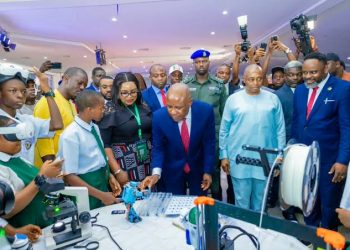
The Executive Secretary of the National Sugar Development Council (NSDC), Zacch Adedeji, has stressed the need for Nigeria to take the giant leap into becoming a proper sugar producing country by banning the importation of raw sugar.

Adedeji said in an interaction with Commerce and Industry correspondents in Abuja that since the National Sugar Masterplan (NSMP) had already banned the importation of refined sugar – to encourage local production – the country needs to surmount certain obstacles militating against full sufficiency in production, and also ban importation of raw sugar.
“We are entering a new phase of field production now, having set a massive foundation with what the NSMP has so far achieved. We will now do our mandate of employment and fully stopping importation of both raw and refined sugar,” he said.
The NSDC boss put the current annual sugar consumption rate of the country at 1.7 million metric tonnes.
He however added that about 228,000 hectares of land is needed to cultivate that 1.7m metric tonnes of sugar needed by Nigerians annually.
He said while Nigeria has attained sufficiency in refined sugar production for the domestic market as part of the diligent implementation of the NSMP, the country is however still importing raw sugar to feed the local factories.
He said the importation of raw sugar and the fluctuation in foreign exchange are partly responsible for changes in prices of refined sugar.
He noted further that the Backward Integration Programme (BIP) of the NSMP would address the raw sugar importation issue over time, and place the country in the league of recognized sugar producing countries.
He expressed satisfaction with the players in the BIP, adding that within the last seven years of the implementation of the Programme, Nigeria has achieved over 3m metric tonnes of refining capacity.
He listed land access, community hostility, foreign exchange restrictions and natural disasters like flooding as challenges of the sugar sector in the country.
“Funding is a challenge. And the sector is capital-intensive. To develop a sugar estate requires special intervention, not 20% Sugar Levy,” Adedeji added.
The NSDC boss also listed logistics and human capital deficiency as some of the challenges the Council is facing.
“We have huge gap in skilled and unskilled Labour to man all sugar institutions. Port congestion, infrastructural deficiency are other challenges,” he noted.
As part of his recommended solutions to the twin challenge of insecurity and community hostility, Adedeji said no less than 20 percent of the sugarcane grown in any area must be done by the people of the area to create inclusion and give the locals a sense of belonging.
On the solution to the perennial problem of human capacity shortfall, Adedeji said: “We’ve sent more than 15 people for training abroad, to some of the top sugar producing countries. They will be the pioneer instructors at the National Sugar Institute (NSI) in Ilorin, which will help us produce the required manpower to run the sector. If not for the Covid-19 pandemic, the NSI would have been fully operational by now.”