
Active citizenship demands that we interrogate the terms and buzzwords that overtly and subliminally shape public opinion. In Nigeria, since the 1990s, politicians and the media are fond of using racialist concepts in discussing politics and ethnic relations. It is now commonplace to read or listen to pundits trumpeting the supposed virtues and interests of the “Yoruba race” or the “Igbo race”. However, the description of an ethnic group as a “race” is a misnomer.

In 1992, the late veteran politician and elder statesman, Yusuf Maitama Sule (Dan masanin Kano) said in a speech delivered at Mumbaya House, Kano that: “Everyone has a gift from God. The Northerners are endowed by God with leadership qualities. The Yoruba knows how to earn a living and has diplomatic quality. The Igbo is gifted in commerce, trade and innovation. God has created us individually for a purpose and with different gifts”.
In fairness, his main point was actually the need for synergy and interdependence between ethnic communities but his articulation of a divinely-ordained apparently racially-based division of labor, especially the endowment of northerners with leadership skills, was controversial. But Danmasani, a member of post-colonial Nigeria’s first generation political elites, was merely expressing a formulation that was entirely consistent with how his generation had been raised to see their newly formed country.
This thesis, which implies fundamental racial differences among Nigeria’s different ethnic groups, is fraught with contradictions. The north is a geographical area not an ethnic group. The term “northerner” is itself meaningless except to just describe a Nigerian who comes from any one of over 100 ethnic communities above the Niger. Its popular synonym, the term “Hausa-Fulani” is an anthropologically dubious reference to a non-existent ethnic identity. Hausa and Fulbe do not even belong to the same linguistic category.
The supposed aptitudes that the Yoruba and Igbo display are not genetic bequests but socially acquired attributes. Anyone from anywhere, given the right environment and nurture, will manifest these attributes. It has already been incontrovertibly established that our diverse people belong to the same racial stock. Yet politicians and pundits persist in using ghastly terminologies like “the Yoruba race” and “the Igbo race” as though they are discussing Orientals and Caucasians.
These racist characterizations derive from a long standing confusion between racial and ethnic groupings that goes back to 18th and 19th century western anthropology. Race refers to hereditary ties while ethnicity refers to social and cultural ties. When people confuse racial with ethnic traits, they are confusing what is given by nature and what is acquired by nurture and learning. Western anthropologists equated tribal classifications with racial categories implying unimpeachable differences between various groups. The colonialists brought these racist views to bear upon their relations with the indigenous peoples of their colonies instituting a lethal dynamic of divide and rule between ethnic and cultural groups wherever they went.
Ethnic identity is not based on biology but on subjective perceptions, which are in turn, products of prevailing ideologies partly constructed by elites and politicians. For instance, some scholars argue that the traditional conception of Fulani identity is not based on physiognomy, ethnicity or geography but on adherence to Pulaaku- the moral code of the Fulani. Any individual who adheres to the code can become Fulani or referred to as one. This elastic conception of identity is not strange. In pre-colonial Nigeria, Damargu could similarly “become Marghi” or erroneously referred to as Kanuri.
Not even racial categories are as static and immutable as they are assumed to be. As the African-American scholar, Henry Louis Gates Jr. pointed out, “Nobody comes into the world as “black” person or a “white” person; these identities are conferred on us by a complex history, by patterns of social acculturation that are both surprisingly liable and persistent. Social identities are never as rigid as we like to pretend; they are constantly being contested and negotiated.” Identity, far from being a divine birthmark, is often a product of the complex interaction of sociology, anthropology and politics. Ethnic groups are not everlasting, dogmatic bequests from heaven or antiquity. They are fluid and flexible configurations shaped by the flux of ideas and historical circumstances. They are not biological entities.
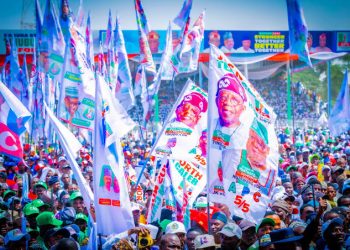
By depicting socially acquired traits as genetic and racial differences, politicians and the media are trafficking in divisive rhetoric, driving wedges between Nigerians and subverting the possibilities of a common citizenship. They are engaging in political mobilization based on accident of birth and coincidence of kinship. Some leading elements of the ruling All Progressives Congress (APC) seems to have built all of the party’s political appeal in the south-west on a synthetic Yoruba racialism. Its immediate goal is apparently the transformation of the southwest into one-party ethnic enclave. Some of its activists and supporters are vociferous in championing the demands of a “Yoruba race”. In this, it seems to be towing the path of the first republic parties, Action Group (AG), National Council of Nigeria Citizens (NCNC), Northern Elements Progressive Union (NEPU), United Middle Belt Congress (UMBC) and Northern Peoples’ Congress (NPC) which one of the greatest nationalists, Adegoke Adelabu criticized for “its self-imposed provincialism” and “its petticoat of shabby parochialism”.
The APC’s tilt towards provincialism demonstrates the inability of opposition parties to articulate a meaningful alternative to the PDP’s former rising ecumenical equal opportunity to get a share of the national cake. Unable to create a national movement that embraces our collective aspirations, the APC seems to be settling for a narrow provincialism which is a grossly deficient riposte to the PDP.
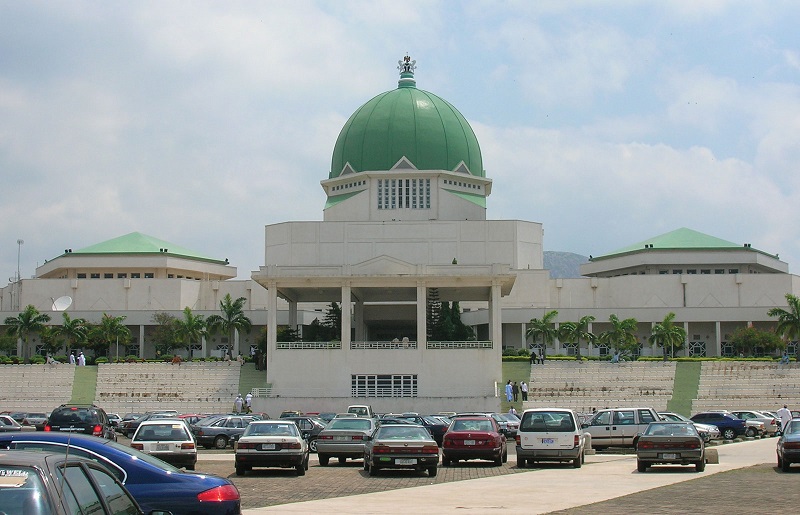
As Nigeria steadily approaches 2023 which is another general election period, one suggests that racist politics should be discarded. The country yearns for its best to takeover and change the narrative. The national assembly deserves to have those versed in the rudiments of law making not the present characters that some hardly understand what legislation entails while others lack the common language skill to express themselves at plenary. There must be change!
Muhammad is a commentator on national issues