
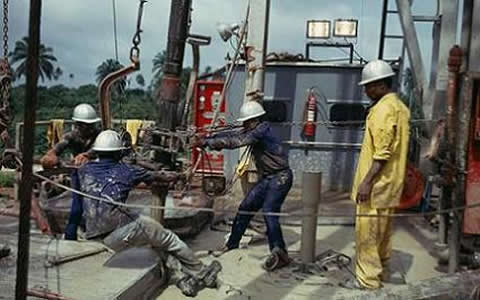
In mid-2014, when the price of oil crashed from a high of $114 per barrel to less than $30, the Nigerian economy was left in tatters. Then there was strident calls by all and sundry for the government to diversify the economy moving away from over reliance on a mono product with a very volatile market.
However, as the price of oil appreciated, the authorities went back to it’s old ways. Before then, the economy had gone into recession leaving a battered aconomy that needed lifeline from other sources for it to survive.

Saudi-Russia trade war
In a bit to control the global price of oil, the Organisation of Petroleum Exporting Countries led by Saudi Arabia and other non OPEC countries led by Russia agreed to cut their production quota in the process causing price to stabilise.
The Russia–Saudi Arabia oil price war was triggered in March 2020 by Saudi Arabia in response to Russia’s refusal to reduce oil production in order to keep prices for oil at moderate level, since its consumption fell dramatically due to 2019–20 coronavirus pandemic.
On 8 March 2020, Saudi Arabia initiated a price war with Russia, facilitating a 65 per cent quarterly fall in the price of oil. In the first few weeks of March, US oil prices fell by 34 per cent, crude oil fell by 26 per cent, and Brent oil fell by 24 per cent. The price war was triggered by a breakup in dialogue between the Organization of the Petroleum Exporting Countries (OPEC) and Russia over proposed oil-production cuts in the midst of the 2019–20 coronavirus pandemic. Russia walked out of the agreement, leading to the fall of the OPEC+ alliance. Oil prices had already fallen 30% since the start of the year due to a drop in demand. The price war is one of the major causes and effects of the currently ongoing global stock-market crash.
This economic conflict resulted in a sheer drop of oil price over the spring of 2020, with the price becoming negative on April 20 (oil production can not be stopped completely, but even the lowest possible production level generates much greater supply than demand, thus oil industry has nowhere to store oil and is ready to pay for it being taken away).
Reviewing the budget
President Muhammadu Buhari, in December 2019, signed a N10.59 trillion 2020 budget, on the assumption of oil production of 2.18 million barrels per day with an oil price benchmark of $57 per barrel.
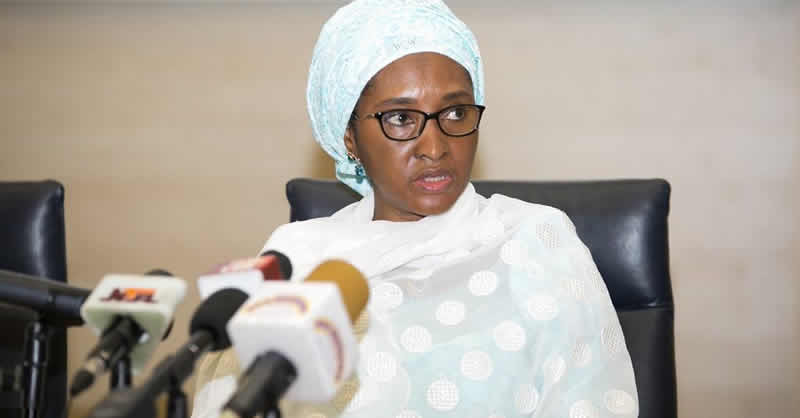
The Minister of Finance, Zainab Ahmed, speaking in Abuja after a meeting with Buhari, said a committee, including herself, the Minister of State for Petroleum Resources, the Group Managing Director (GMD) of the NNPC and the Central Bank governor would determine the size of the budget cut in the coming days and revisit the benchmark crude oil price of $57 a barrel used to calculate the budget.
Mrs Ahmed says the collapse in oil prices will slash Nigeria’s revenue by as much as 50 per cent, causing a 20 per cent cut to the nation’s capital budget and an additional 25 per cent cut in annual expenditure.
She explained that Nigeria would have to reduce the amount of federal funding for upstream projects. “The reduction of the crude oil price from the $57/bl we budgeted for to $20/bl and means that we are going to get so much less revenue, almost 45 per cent less than we planned, and because of that we have to amend a lot of projections in the budget to reflect our current realities,” she says.
However, oil prices had plummeted by over 25 percent, forcing futures to its lowest in years, as Brent crude benchmark fell from $45 a barrel to about $21.
With this drastic fall in price resulting in serious shortfall in revenue projection, the government was left with no choice than to review the budget downwards by N320 bllion to about N10.27 trillion as against N10.59 trillion and the benchmark to about $30 per barrel.
Even at that, the budget still have a high deficit which analyst say would need another round of borrowing to fill.
2020 budget implementation
With the global economy yet to get back to full steam and oil price still at a very absymally low level, the Director-General, Lagos Chamber of Commerce and Industry (LCCI), Muda Yusuf, says the fall in oil price has implications for the level of fiscal deficit in the budget, as its implementation would be constrained; infrastructure financing affected; borrowing increasing, and the capacity to fund capital projects severely constricted.
Meanwhile, with the new deal entered into by both OPEC+ and other oil producing countries to cut production in other to shore up prices, it means that Nigeria’s daily oil production capacity for the rest of the year will significantly fall below the revised volume of about 1.7 million barrels in the 2020 budget.
After the meeting that arrived at the landmark agreement, Nigeria’s daily production would further drop by almost 300,000 barrels from the proposed revised volume.
According to Minister of State for Petroleum Timipre Sylva, Nigeria would produce 1.412 million barrels per day between May and June 2020 in the first phase of the group’s agreement and between July and December 2020, the countryNigeria would produce about 1.495 million barrels per day in the second phase of the agreement, and another 1.579 million barrels per day between January 2021 to April 2022 in the third and final phase of the agreement.
For Professor Uche Uwaleke, the drop in revenue will widen fiscal deficit and to finance it means more borrowing which worsen Nigeria’s public debt burden.
Uwakeke said “The implications of the crash in crude oil price are obvious which is why the government has revised downward the 2020 budget. This means resetting priorities such that critical projects that drive development do not suffer. State governments will be the worst hit as many will have difficulties paying workers salaries.”
In the same vein, the Chief Executive Officer of Gubenco Nigeria Ltd., Mr. Godwin Ubochi said the fall in oil price will negatively impact the budget. He said that as the sector that accounts for over 80 per cent of the nation’s foreign exchange, there will be less money available for the government to implement capital projects.
“Note that the budget is already a deficit budget to the tune of over 2 trillion naira. It is therefore certain that with the fall in oil price and the lowering of the benchmark, there will be less money to spend. There will be little or no capital projects,” he told our correspondent.
He further said: “Without capital projects, there will be no circulation of money and unemployment will soar. So its going to be a very difficult year with regards to jobs. Here is where the ingenuity of a very smart government can be tested with regards to management and allocation of scarce resources come to bear. It is also an opportunity for government to widen it’s revenue base, especially agriculture, mining and manufacturing. With global slow down in world economies and a very dramatic fall in oil prices, Nigeria is in for rough a time. It is also an opportunity to develop the other neglected sectors of the economy such as mining, agriculture and manufacturing.”
‘Judicious utilization’
Despite the above, Ubochi believes, a resourceful government can make a success out of it by blocking leakages and expanding our revenue base.
“For me it’s not about the cut in the budget but judicious utilization of what is available. The major problem is monumental corruption in the polity, misappropriation, embezzlement, misapplication of fund, outright stealing, nepotism, government ineptitude, and lack of ingenuity and smartness in governance as well as brazen lack of leadership. If the right things are done, Nigeria has all it takes to pull through the recession without hurting the labour market. Nigeria is blessed our problem is lack visionary leadership,” he added.
“The big lesson for Nigeria”, Uwaleke says, is for the fiscal authorities to recognize that “we cannot afford not to pay serious “attention to diversifying the revenue base of the economy,” he added.